
Home > Courses > F25 6397 Introduction UX Design > Eubin Tak
Maven
Course:
Instructor:
Student Name:
INDS 6397 | Introduction to UX Design
Min Kang
Eubin Tak
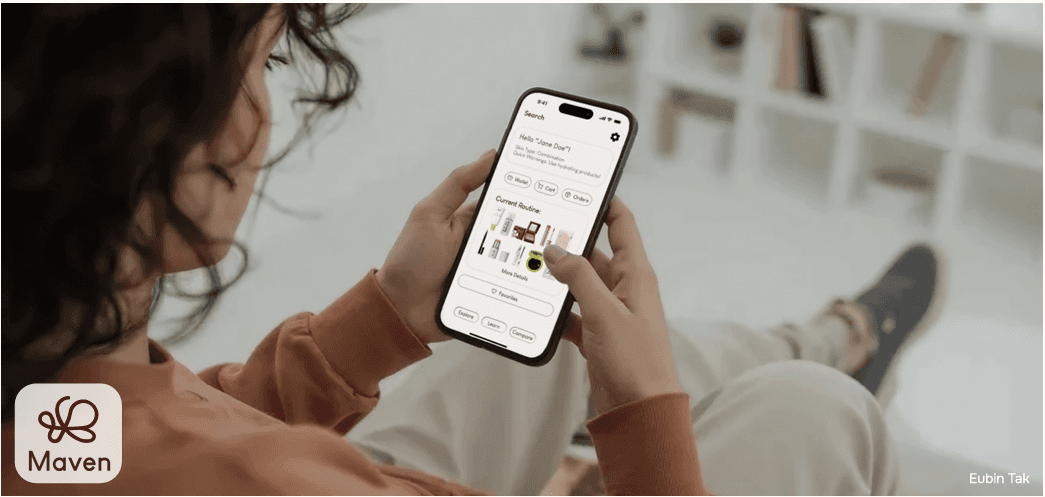
Finding makeup that suits individual skin types, conditions, and aesthetic preferences remains a frustrating and costly challenge. Many users, especially those with acne, eczema, or sensitive skin struggle to identify products that are both effective and safe. The beauty industry’s one-size-fits-all marketing often leads to wasted purchases, worsened skin conditions, and diminished self-esteem.
Why This Problem Matter
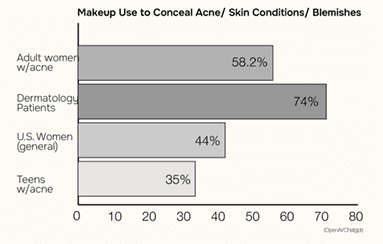
Many people—especially those with acne, eczema, or sensitive skin—struggle to find makeup that truly works for them. Existing tools like Sephora’s shade matcher, Yuka’s ingredient scanner, and AI‑based skin analyzers help, but none offer a fully personalized, skin‑condition‑aware experience. Research shows that 36–74% of users wear makeup to cover blemishes or skin conditions, 99% see visible improvement with corrective makeup, and most rely on online reviews, friends, and influencers when choosing products. With Americans spending over $1,700 a year on beauty—often wasted on mismatched or irritating products—there’s a clear need for a smarter solution.
Research & Strategy
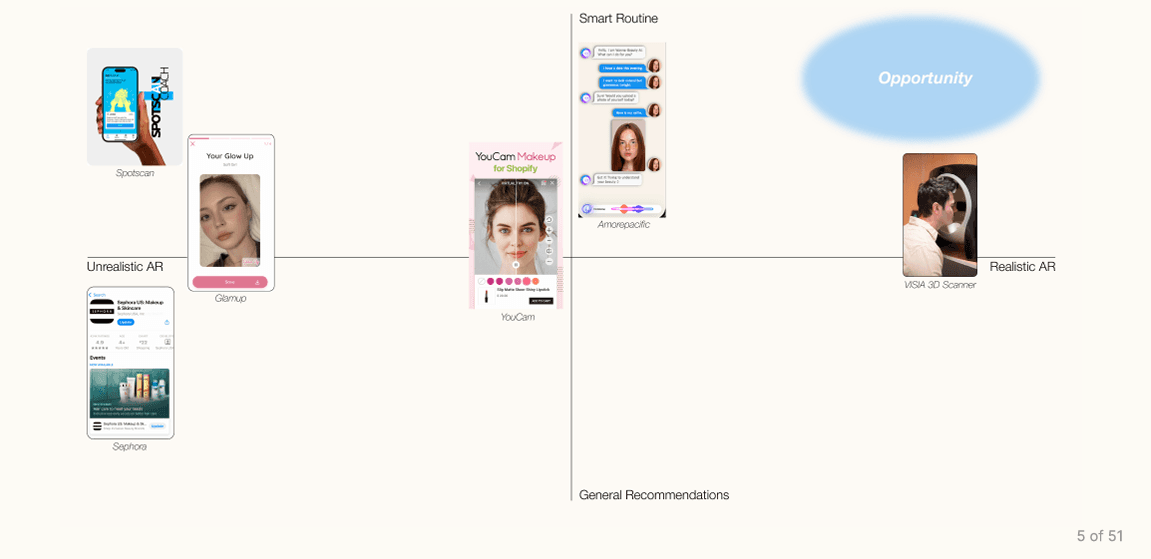
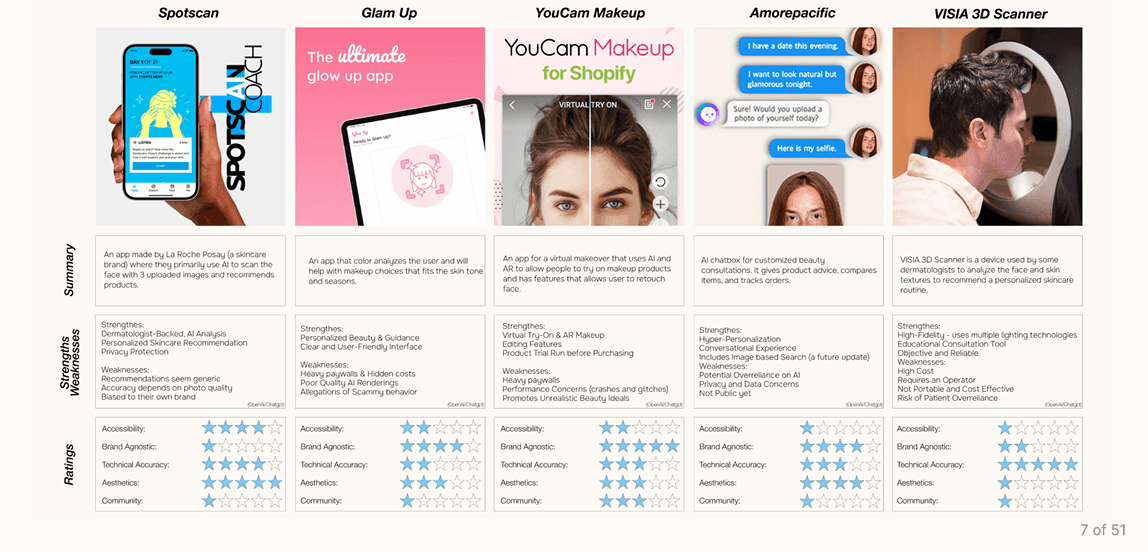
The current landscape of beauty tech is fragmented. Most apps fall into either unrealistic AR or generic recommendations, leaving a gap in tools that combine realistic AR with smart, skin-aware routines. This quadrant—currently underserved—is where our app thrives: offering personalized guidance that’s both technically accurate and emotionally resonant.
Most tools lack brand neutrality, community support, and skin-condition specificity—key areas our solution addresses
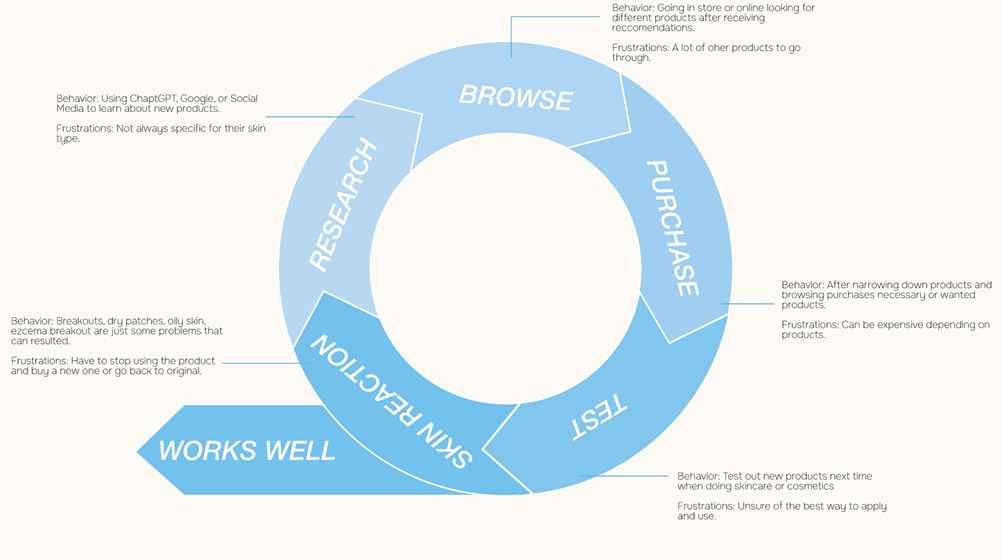
Choosing skincare or makeup is a frustrating cycle. Users start with broad, generic advice online, then get overwhelmed by endless product options. Even after buying, products often require confusing trial-and-error, and many lead to breakouts or irritation—forcing users to start over. Only a few products ever truly work. Our app cuts through this cycle by giving users personalized, skin‑matched recommendations from the start.
Consumers want more than trendy products—they want routines that fit their skin, lifestyle, and budget. Existing tools overlook the complexity of skin conditions, age, and aesthetic goals. The deeper issue is rapid, addictive consumption. Our app promotes mindful choices by helping users understand what works for their skin—before they buy.
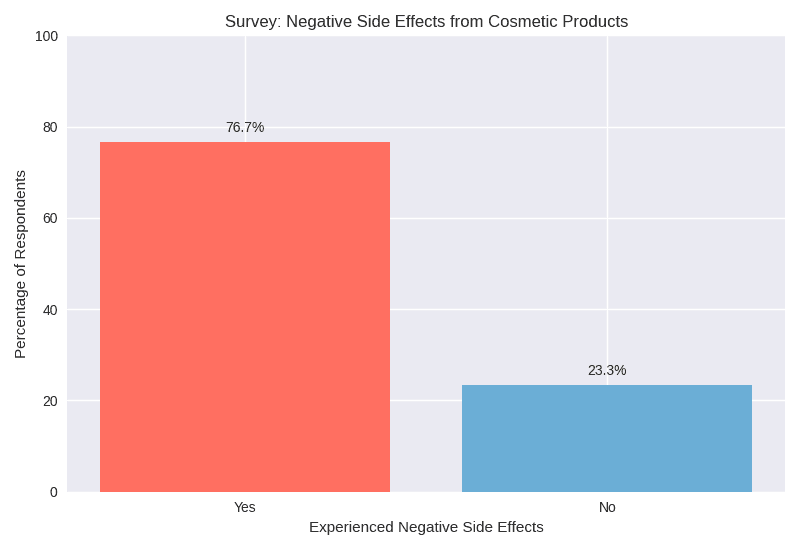
survey revealed a cycle of frequent purchases, low satisfaction, and skin-related setbacks. Nearly half of respondents buy cosmetics weekly, yet over 75% have experienced negative reactions like breakouts or irritation. Many admit to discarding unused products, driven by impulse and unclear guidance. While 70% research ingredients like “non-comedogenic” before buying, most still lack confidence in their routines. Users overwhelmingly value personalization—products that truly match their skin type, concerns, and lifestyle. These insights highlight the urgent need for smarter, skin-aware recommendations that reduce waste and improve results.



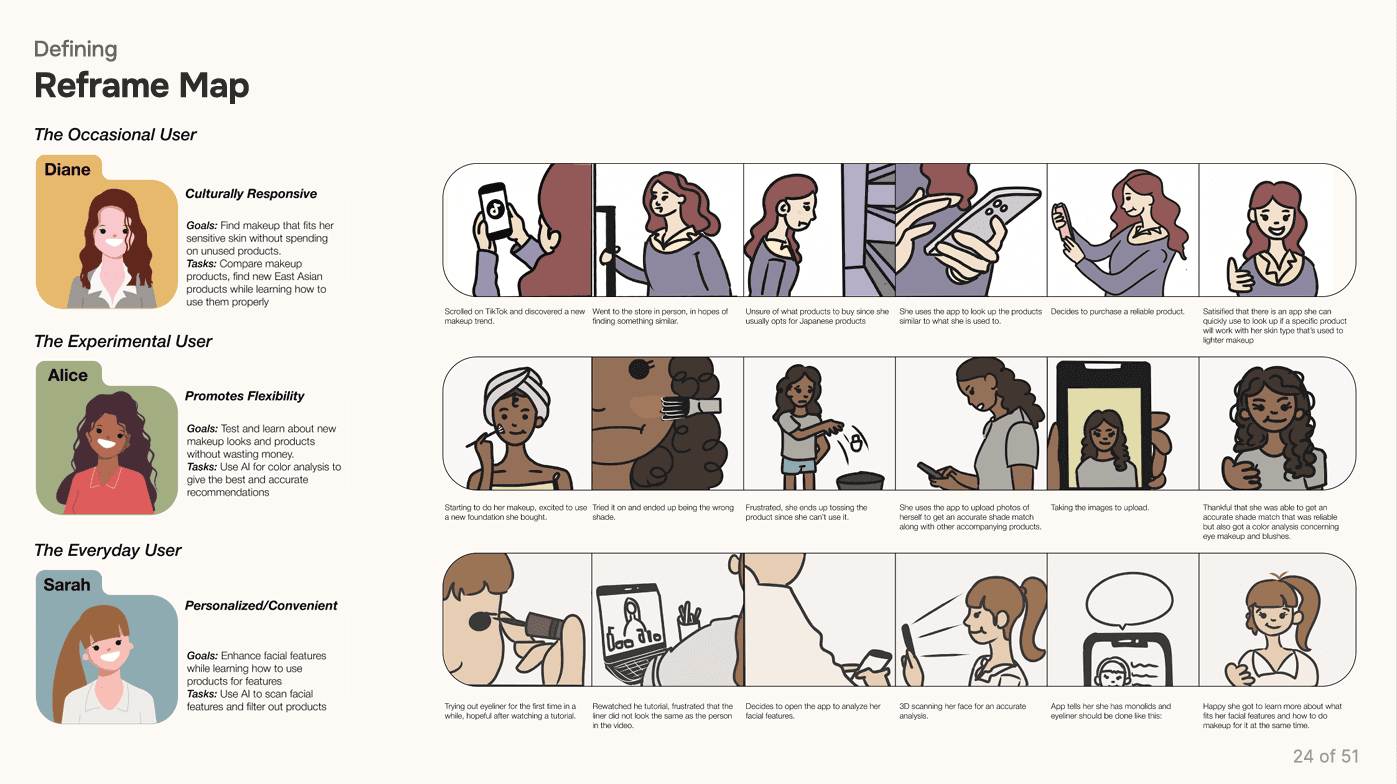
Across all interviews, users expressed a desire for personalized recommendations, cultural product variety (Korean, Japanese, Western), ingredient transparency, price filtering, and integrated tutorials. These insights reinforce the need for a system that’s not just smart—but sensitive to individual skin needs, preferences, and learning styles.
System Design
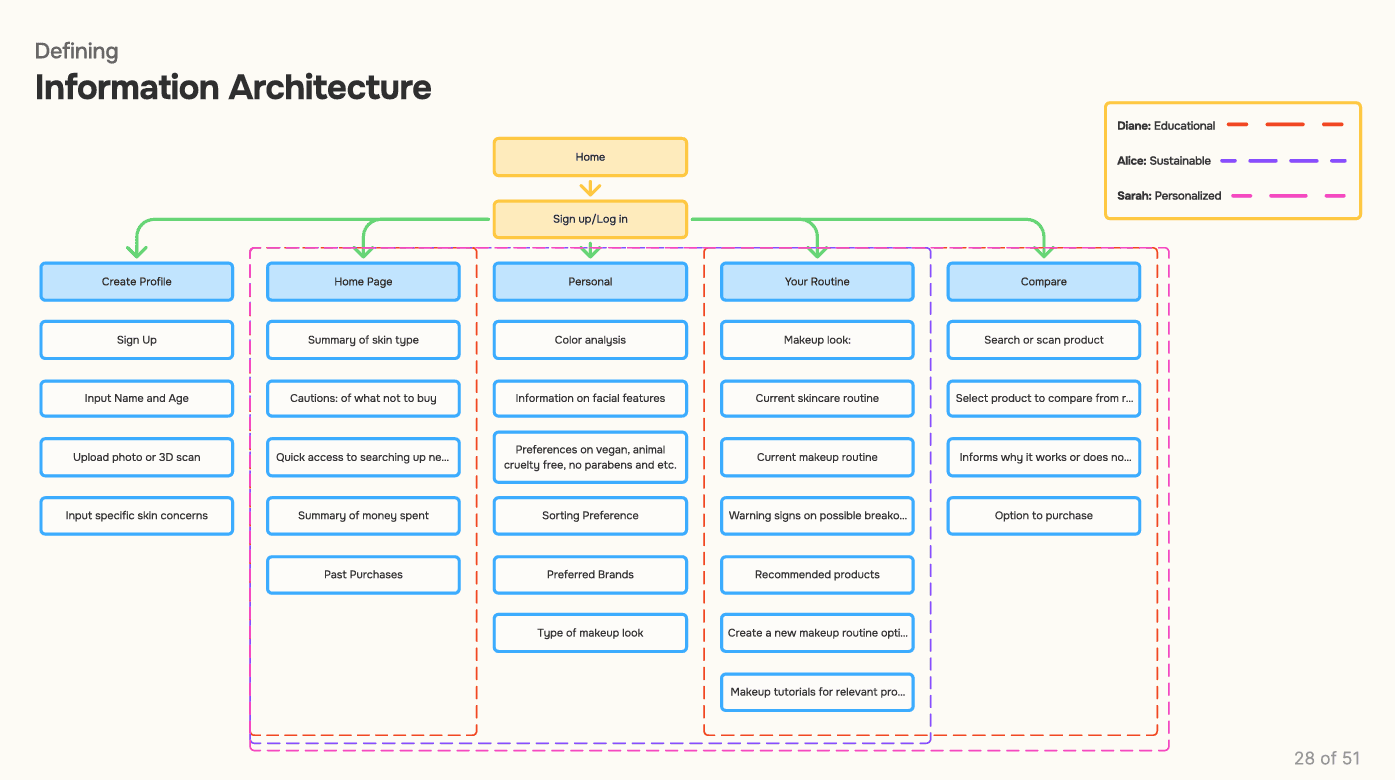
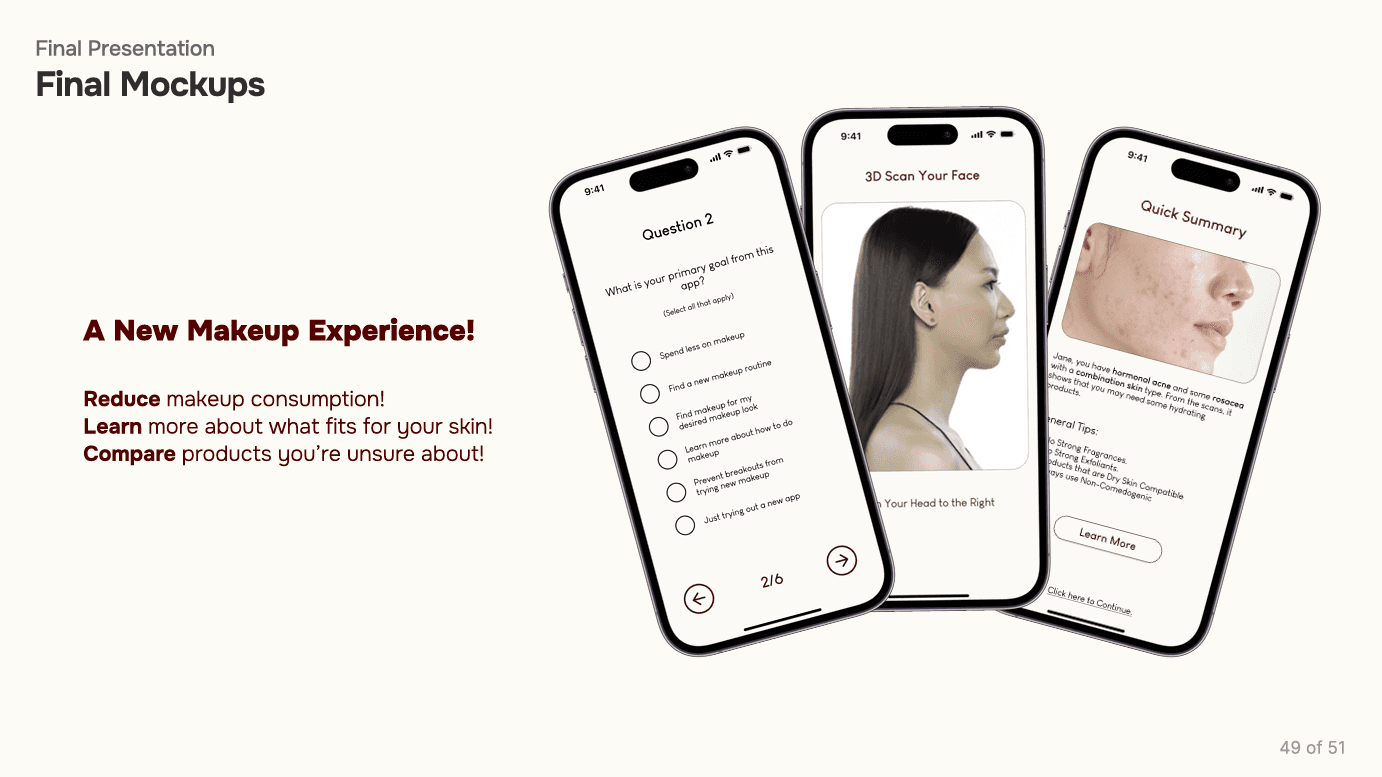
The system is designed to eliminate guesswork by analyzing a user’s skin type, facial features, and product history to deliver accurate, personalized recommendations. It filters out products that may cause irritation or breakouts, surfaces options across different cultural markets, and organizes them by price, ingredients, and compatibility.
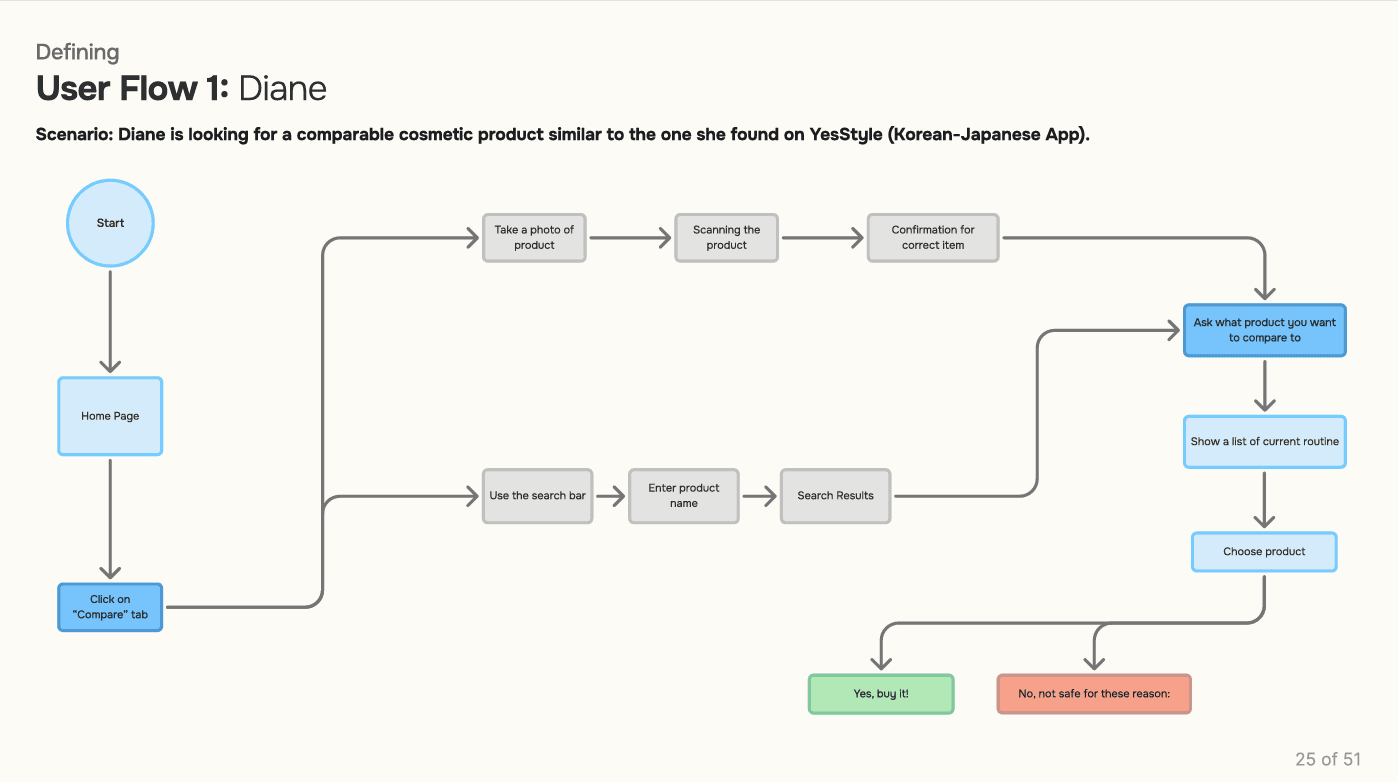
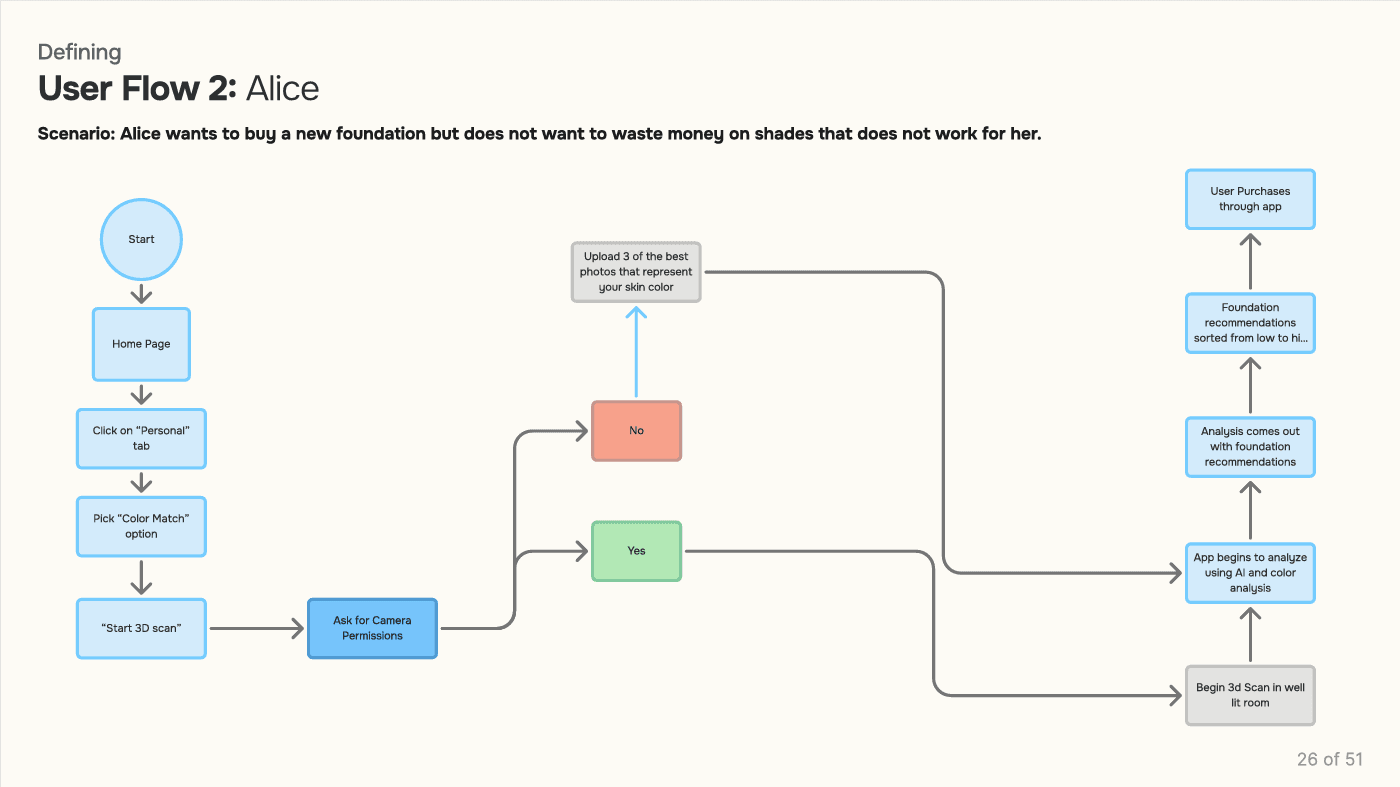
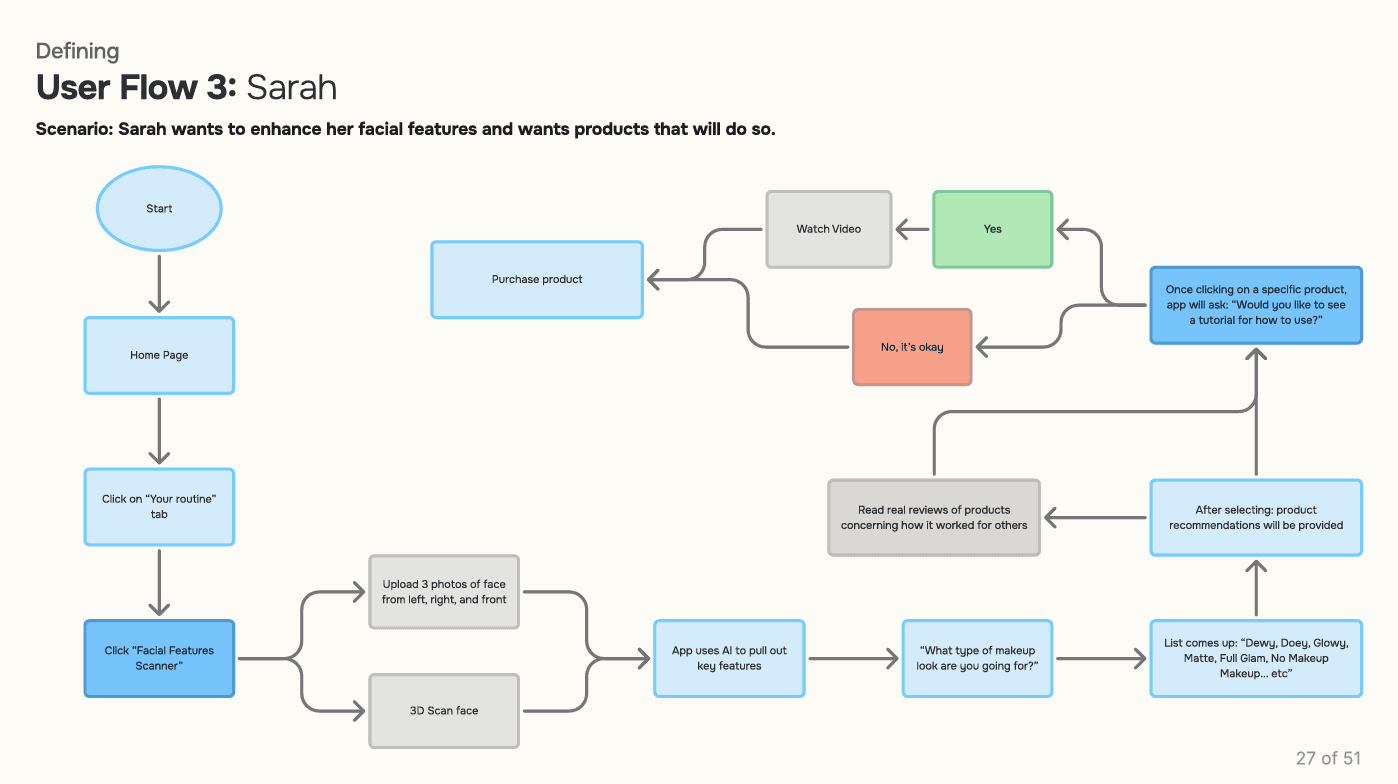
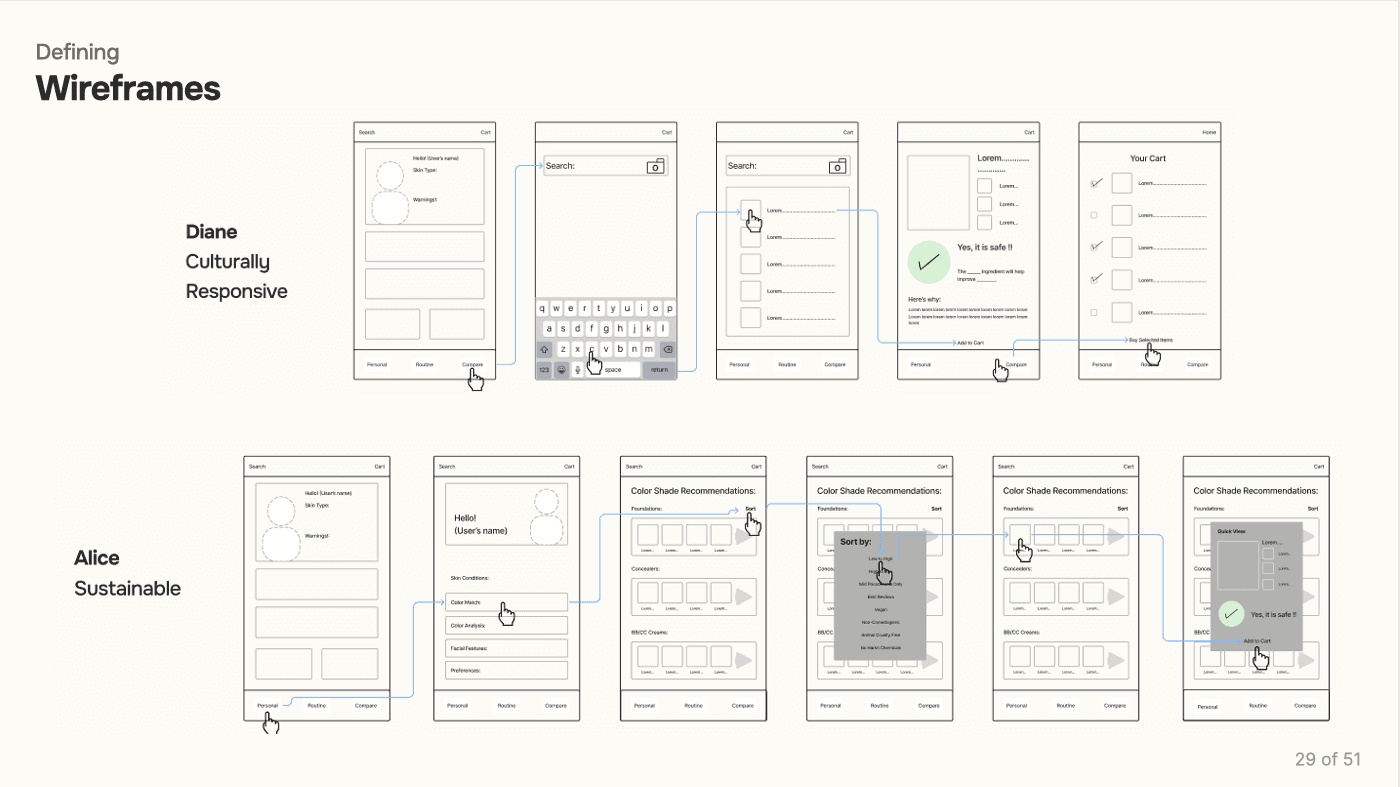
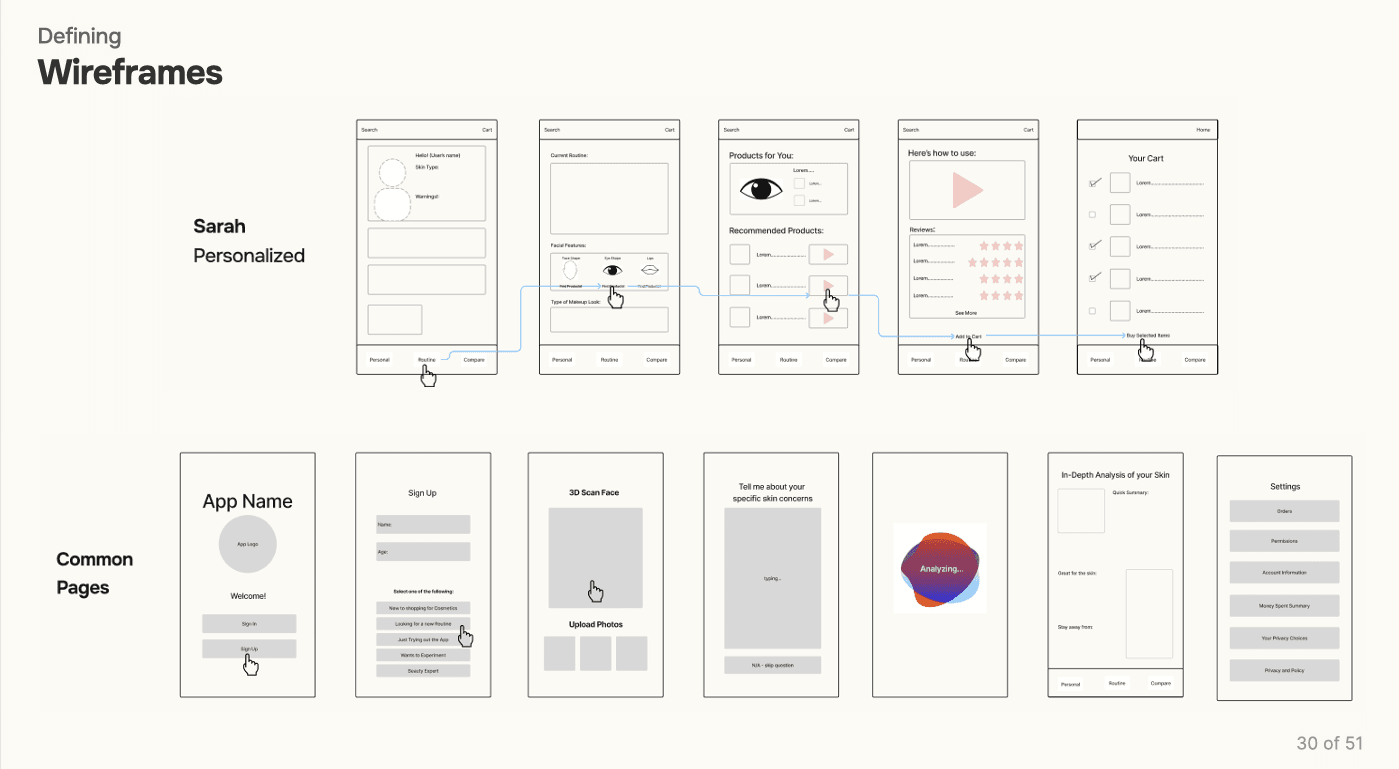
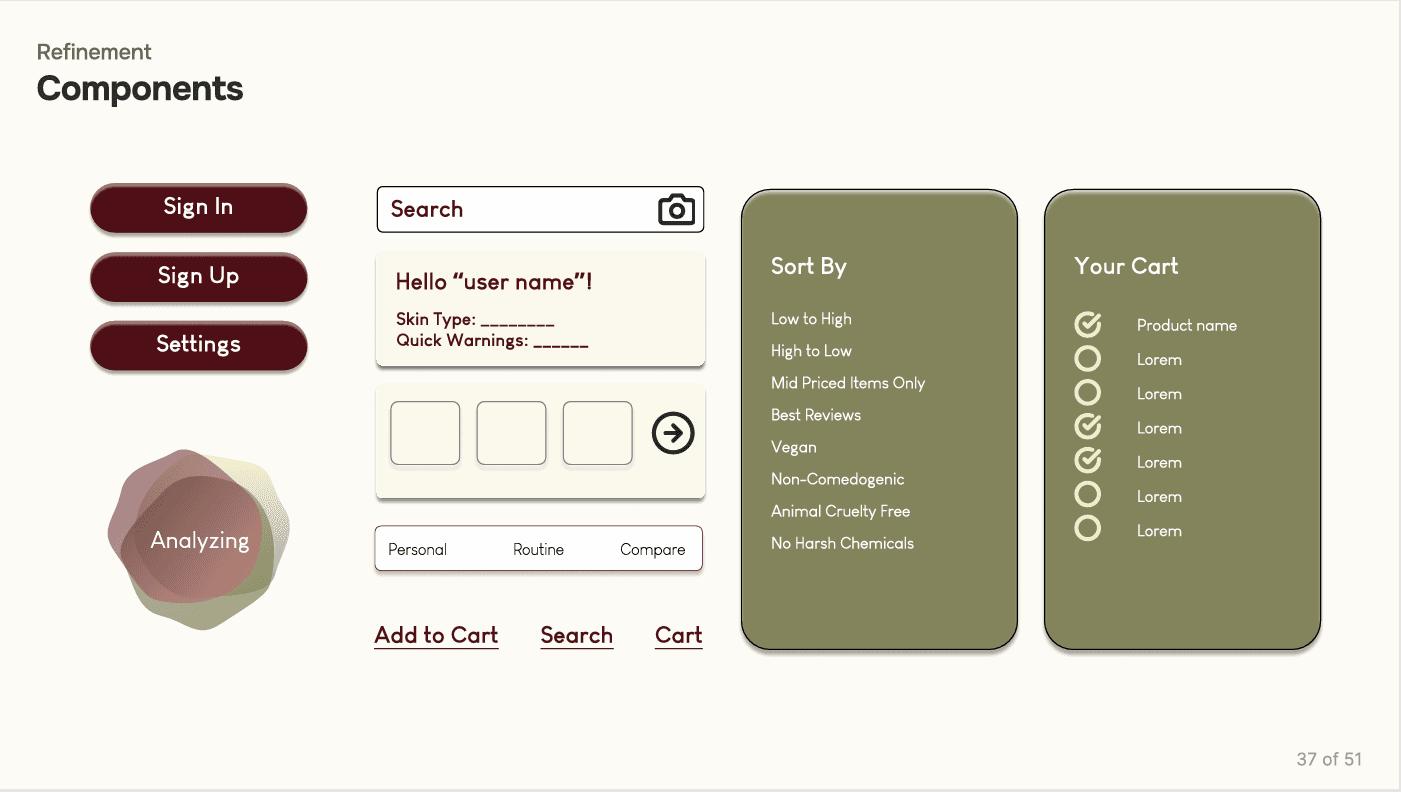
The design process began with mapping user needs and frustrations, then translating those insights into clear user flows and low‑fidelity wireframes that focused on simplicity and accessibility. These wireframes evolved into structured layouts that prioritize guidance, personalization, and ease of use.
Branding
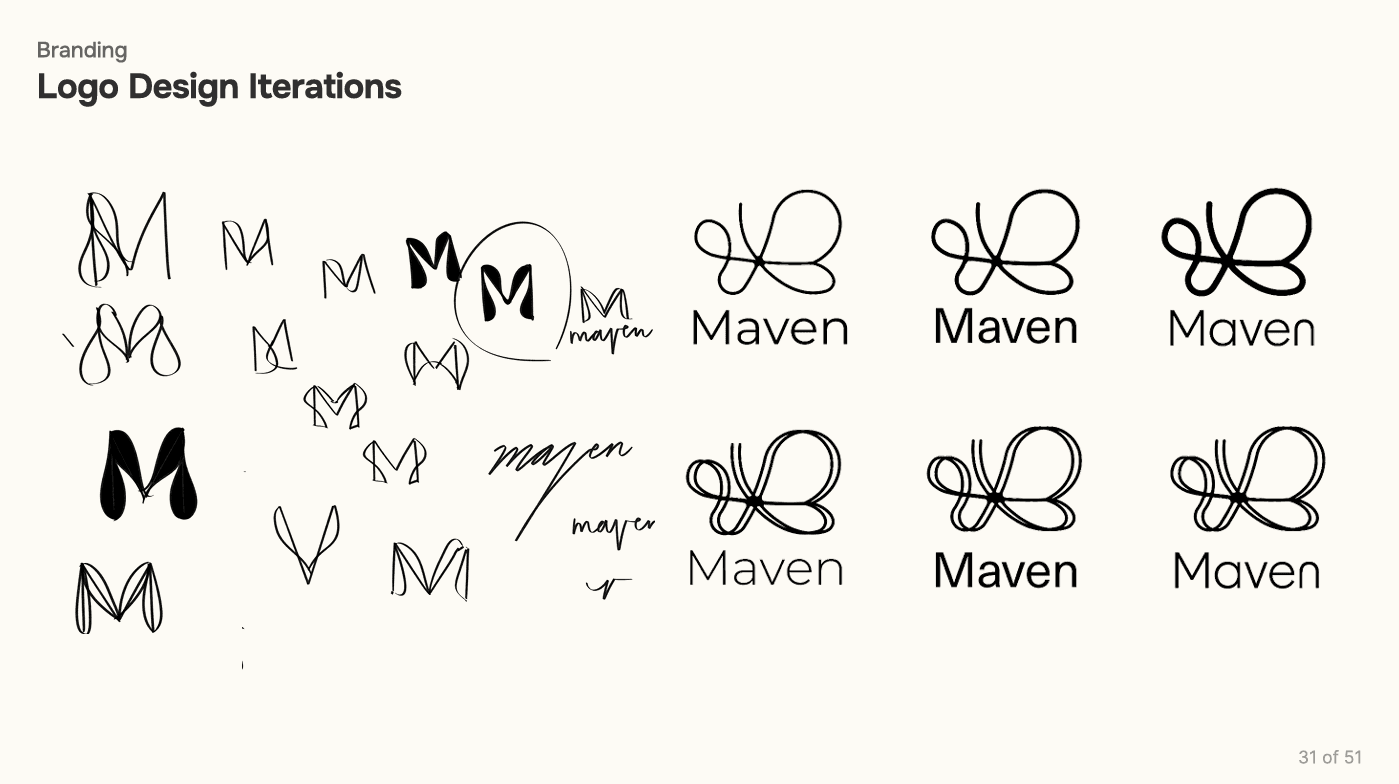
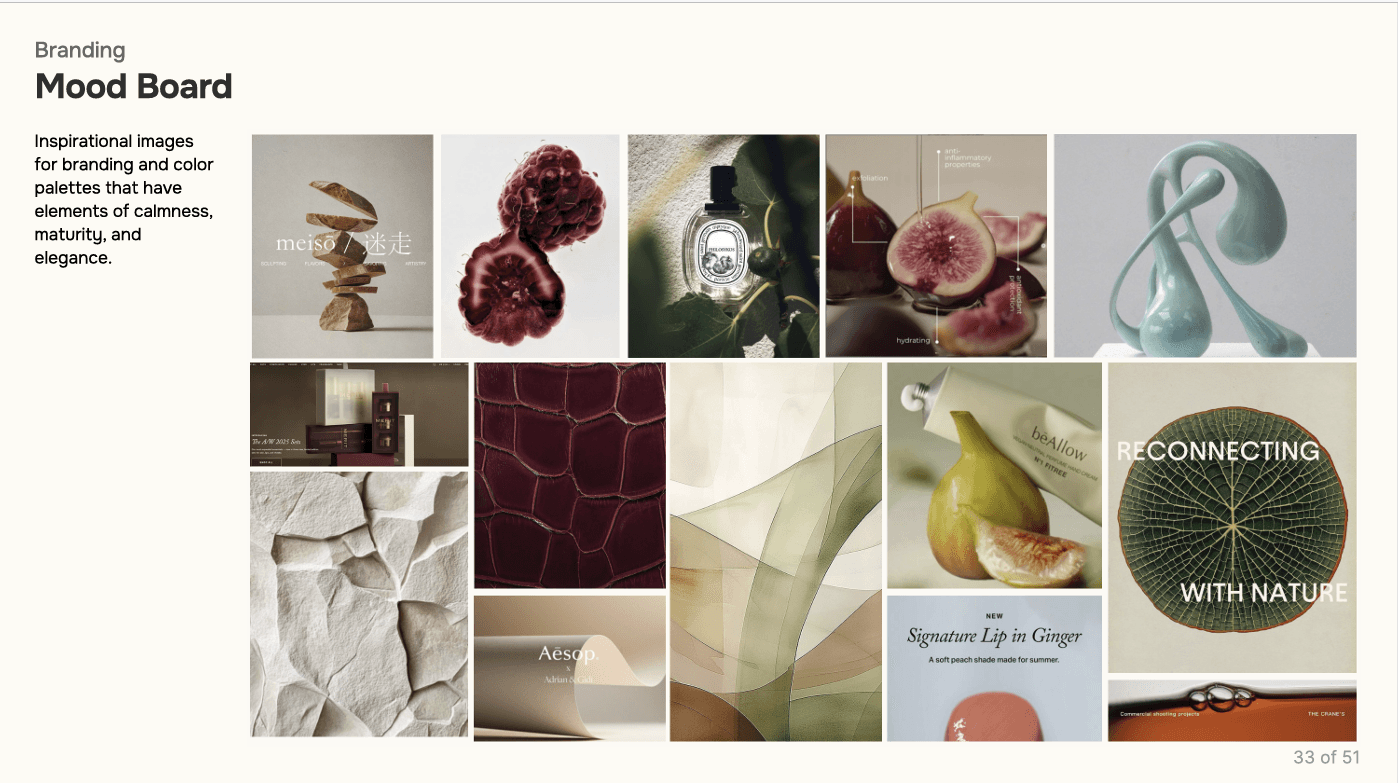
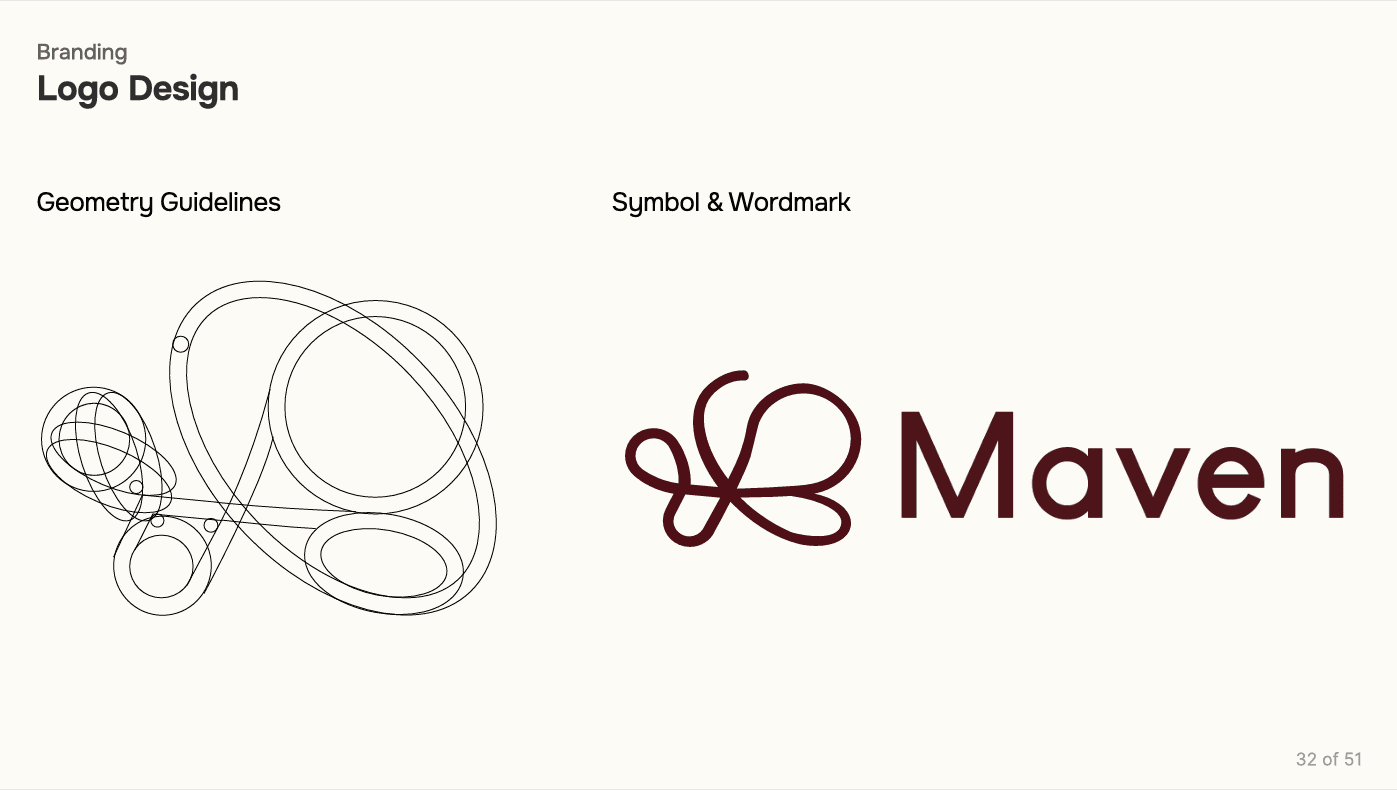
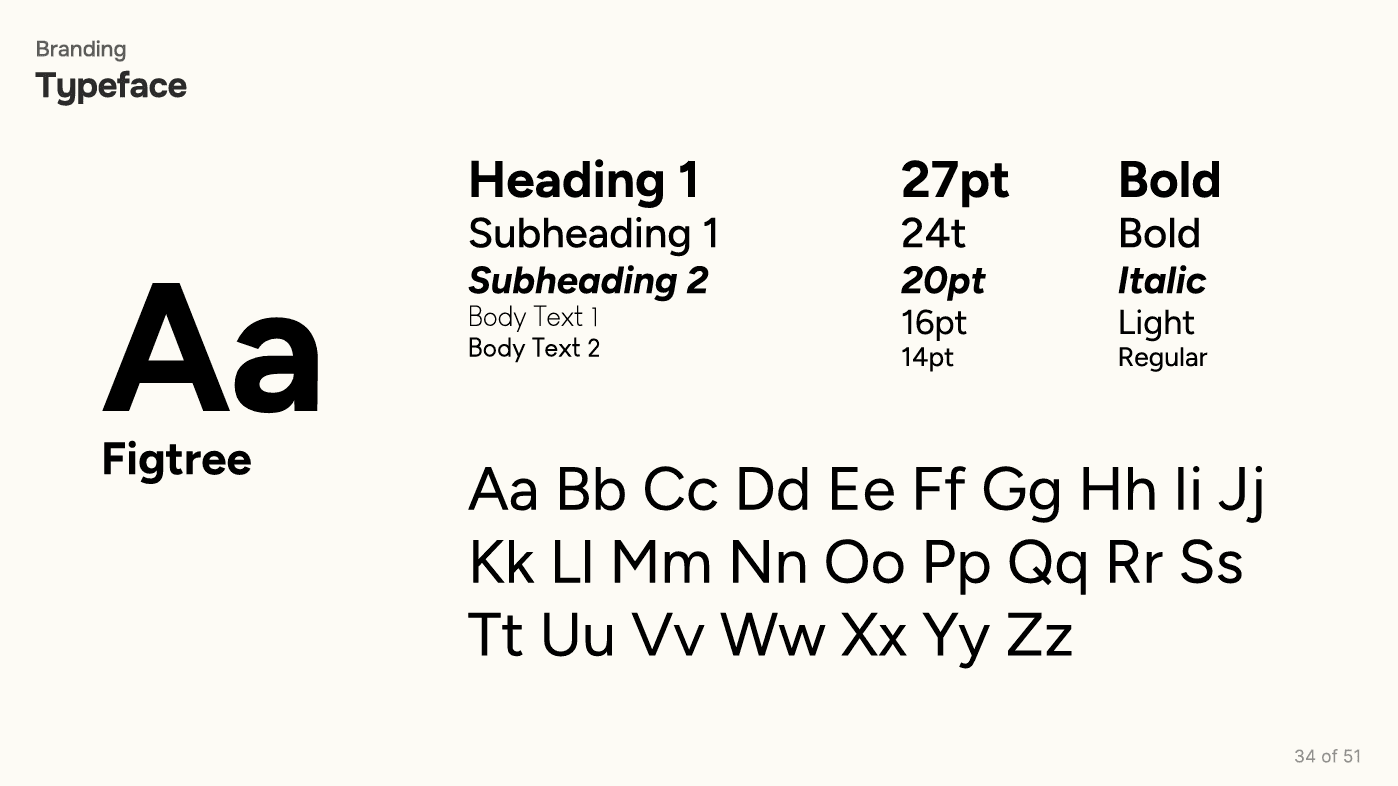
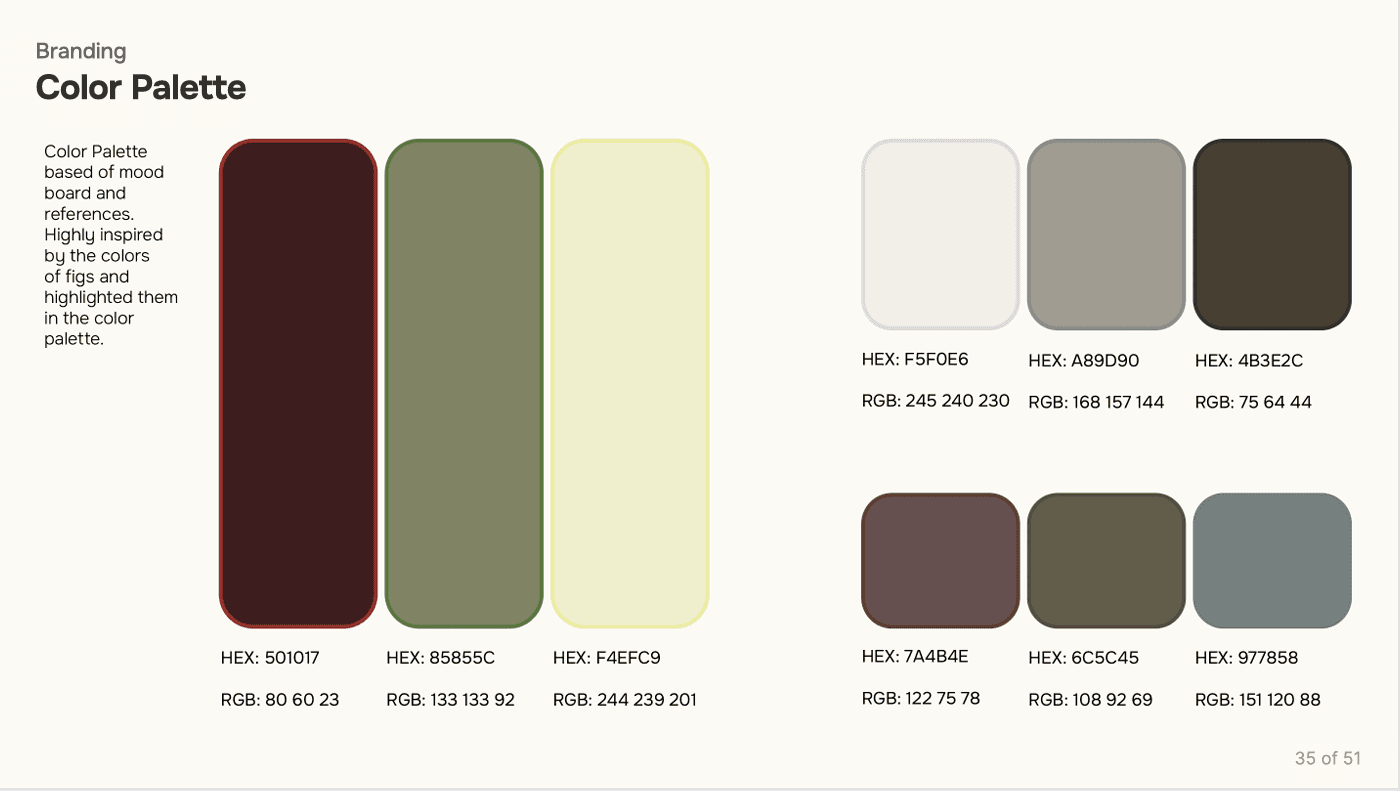
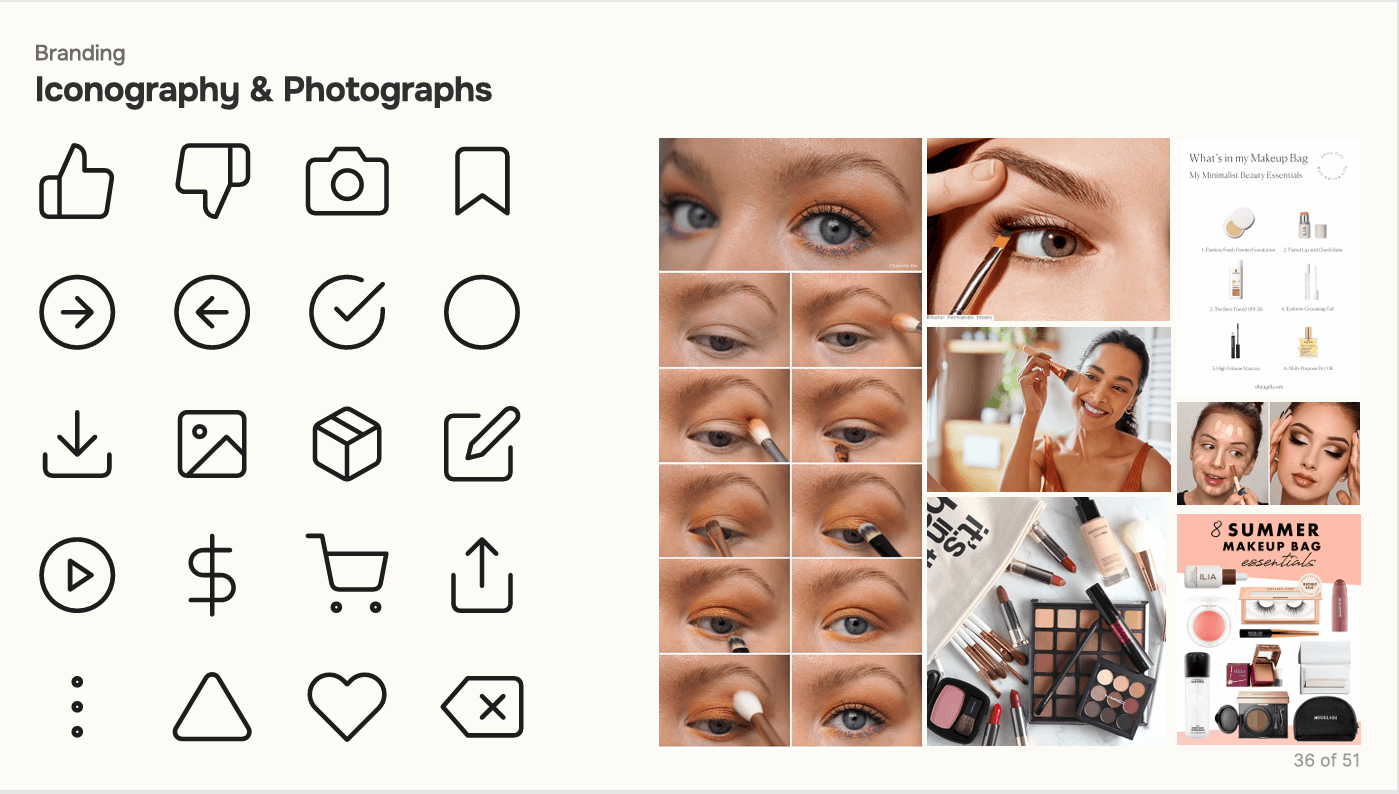
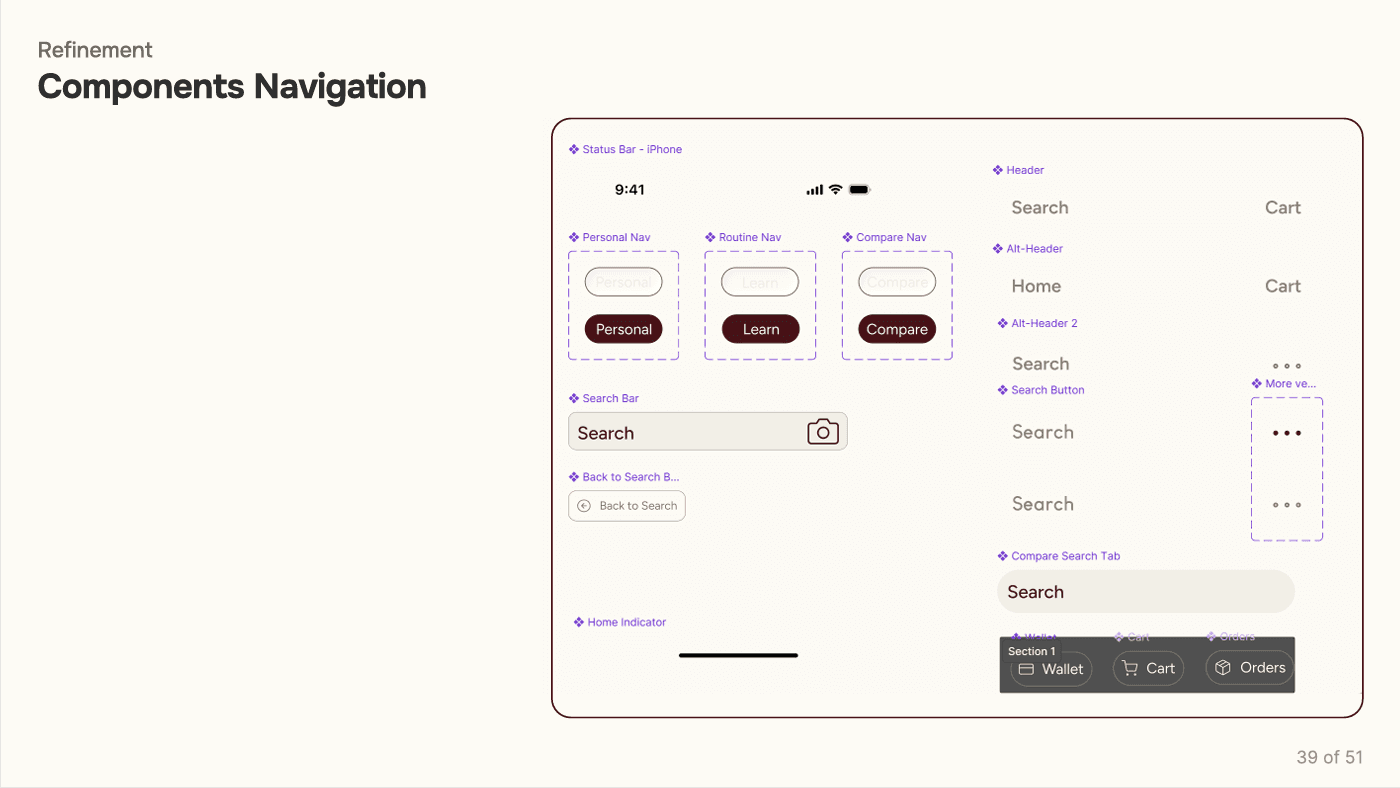
The branding centers on clarity, warmth, and upward momentum—reflecting a system designed to guide users toward confidence rather than confusion. The visual identity uses soft, modern tones and clean typography to create a sense of trust and approachability.
Prototype & Testing
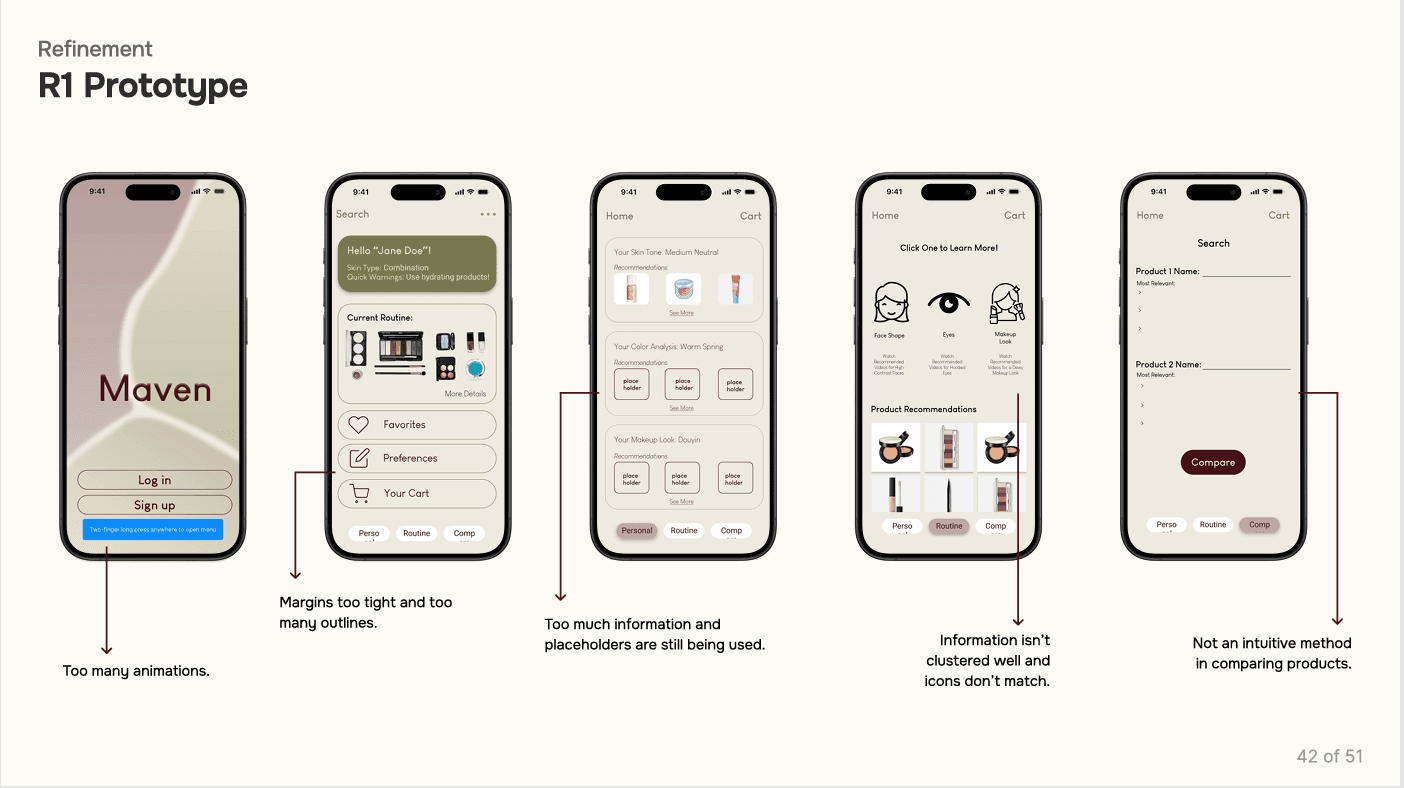
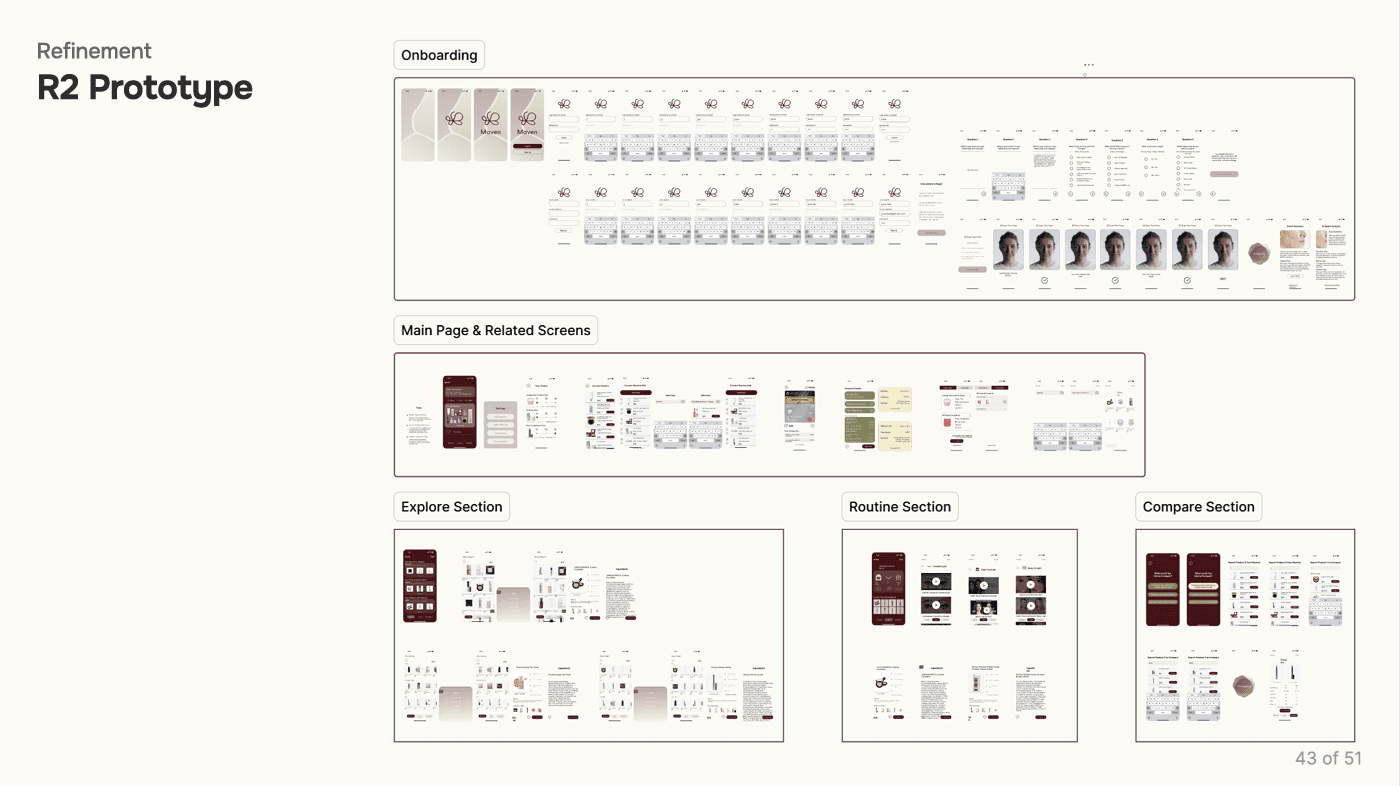
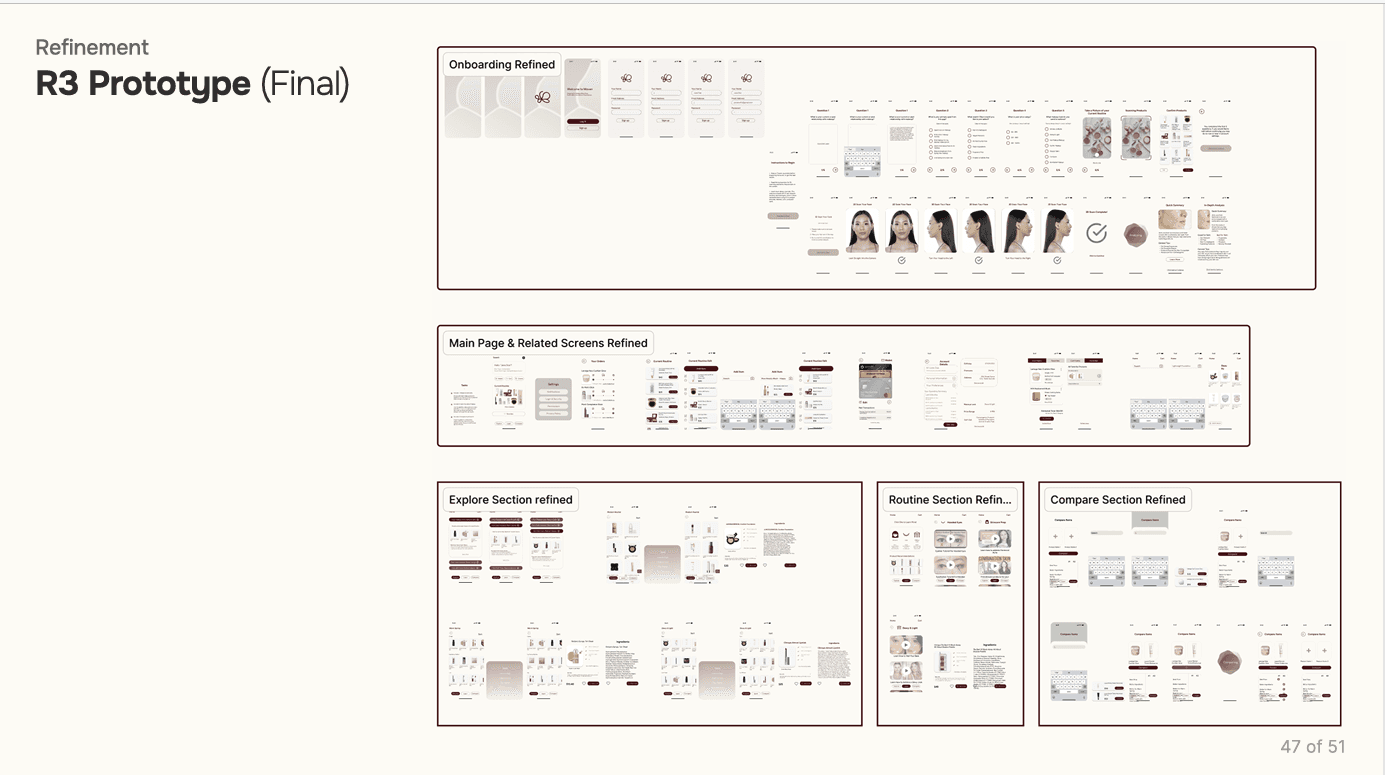
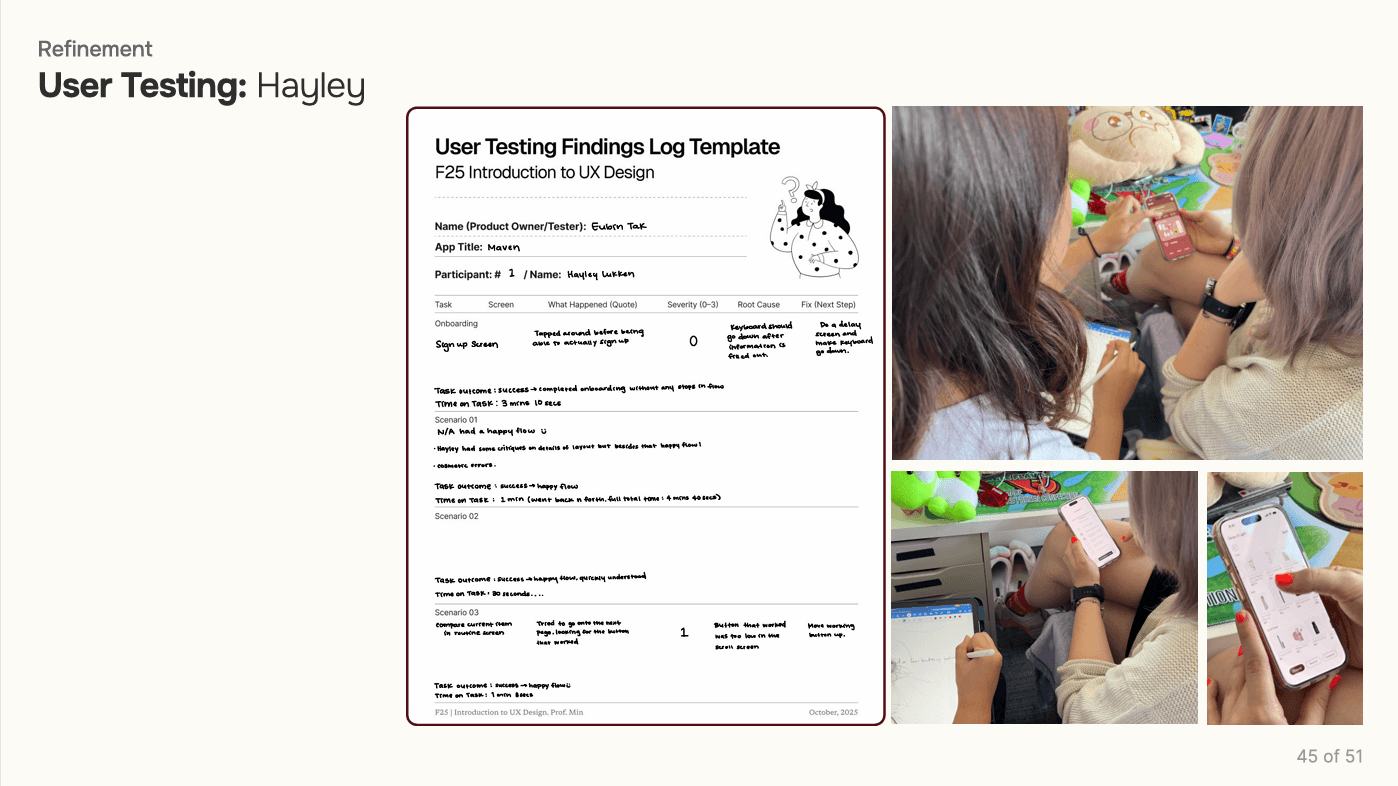
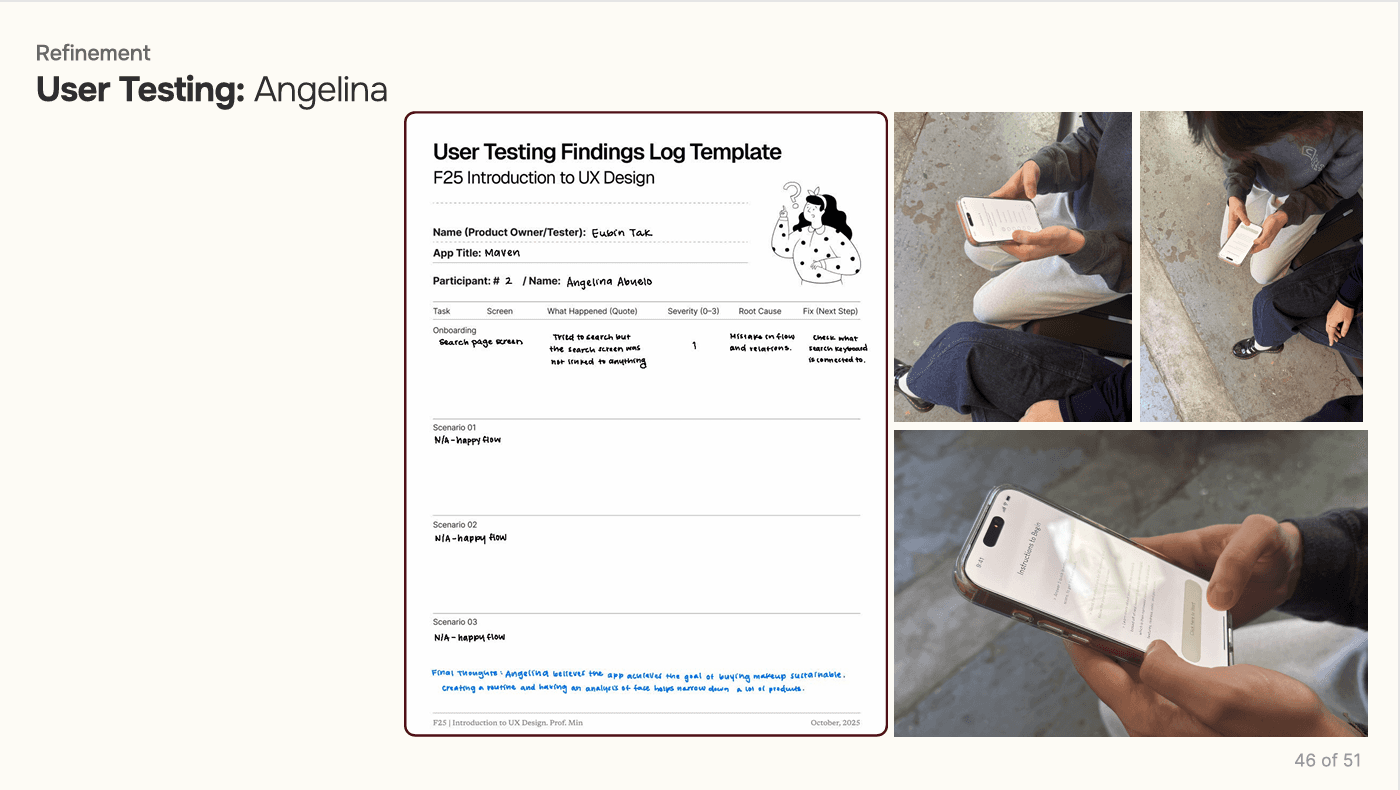
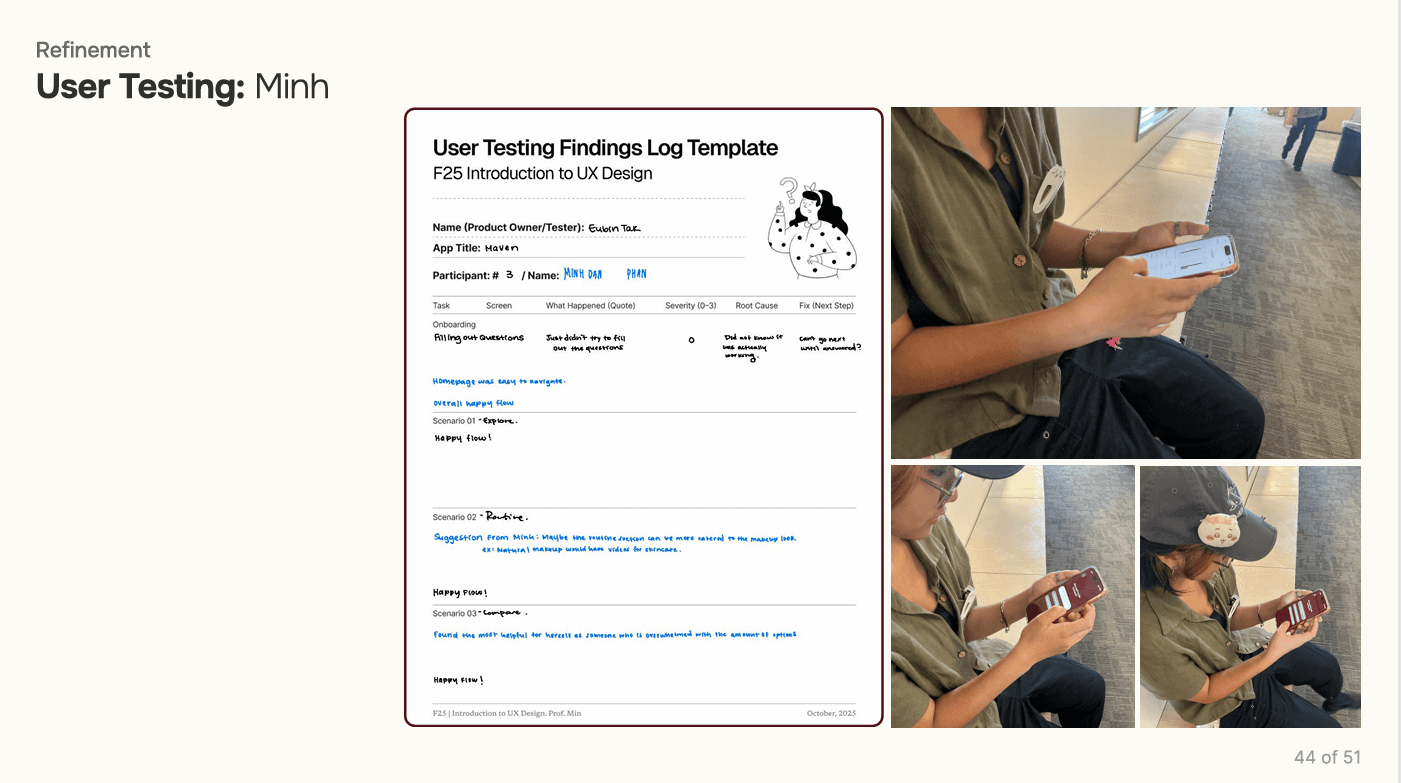
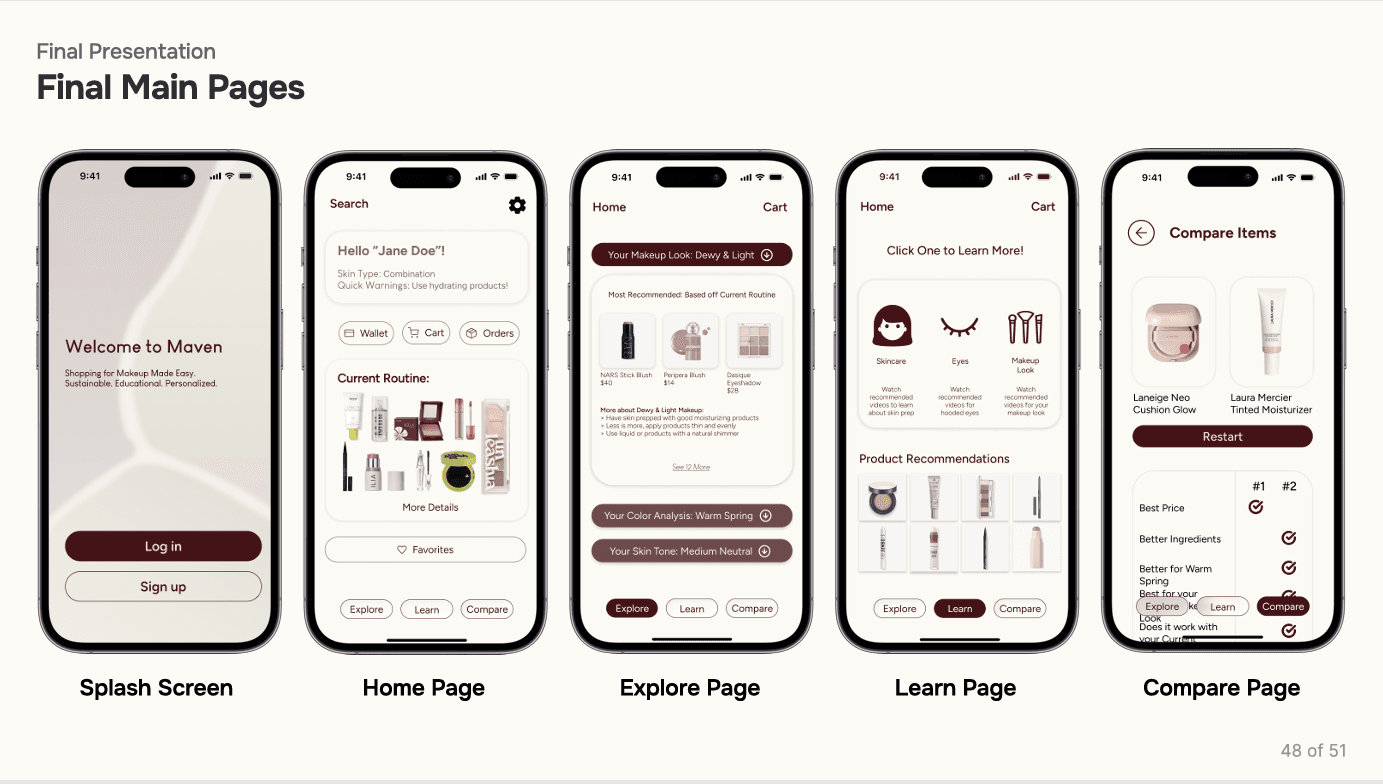
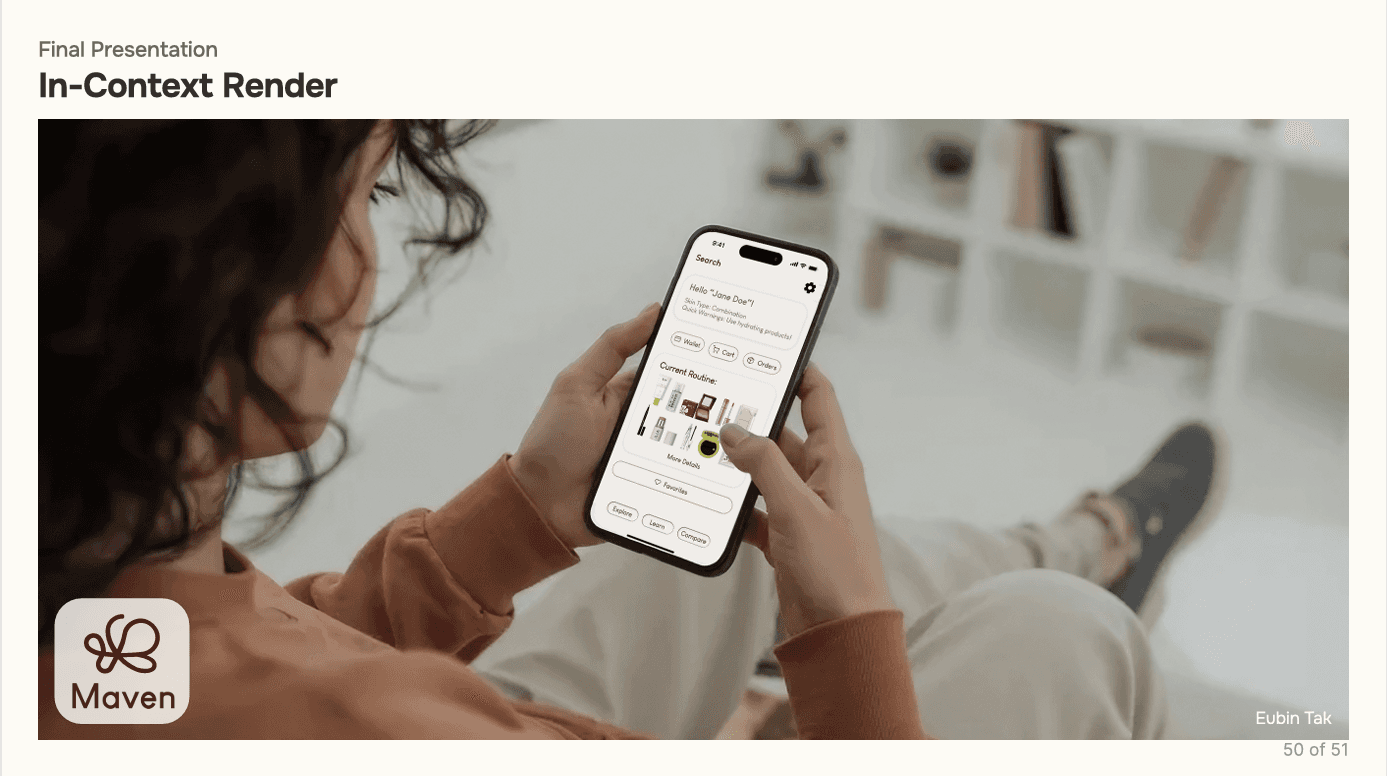
The prototype translated core features into an interactive flow, allowing users to explore personalized recommendations, product filtering, and integrated tutorials. Usability testing with participants surfaced key refinements—simplifying navigation, clarifying terminology, and improving the accuracy of skin‑type inputs. These iterations ensured the system felt intuitive, trustworthy, and aligned with real user needs.
Building Sustainable Design Education.