Paper Recycling System

Course:

Instructor:

Student Name:

INDS 3500 | Industrial Design Studio V (Studio)

Min Kang & Jeff Feng

Marvin Long

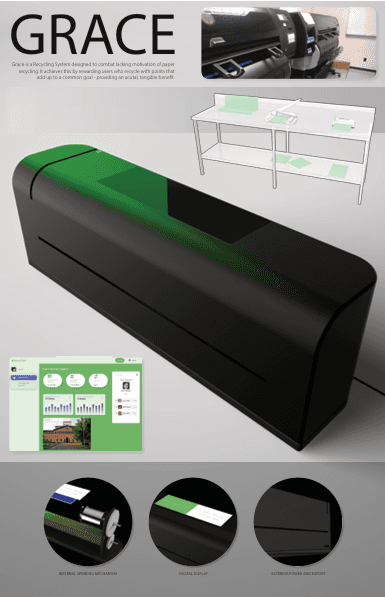
Given the challenge of using technology to solve a problem, This project is sought to solve the issue of waste paper. Many types of paper seen in the COAD don’t get recycled, and people are unmotivated to recycle that paper in the first place
Objective

Design a system in an academic enviornment that encourages people to recycle waste paper and keep it from entering typical recycling systems

Exploration

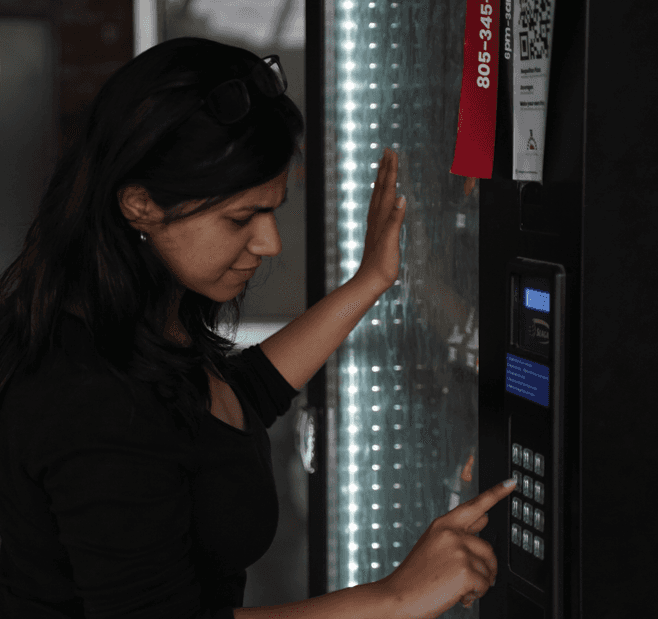
Guilt and embarassment are emotions that can reduce willingness to recycle. Young adults balancing many other stressful tasks are less interested in recycling as a whole, and need more tangible benefits.

Conventions

Thicker papers such as plotter paper are put in the mainstream recycling system much less than typical letter paper. Conserving the energy from reycling is much more important that conserving large amounts of paper

Tangibility

The system of rewarding recycling behaviour is based on a three-tier system of reward. Firstly, a community reward that encourages the entire user base in a school or company to cooperate towards paper reycling (New Printer for Example

Secondly, a highest-earners reward, given to those in a user base who recycle the most paper. (Gift Baskets for Example) And lastly, a small discount reward that provides a tangible benefit to recycling waste paper. (A Vending Machine Discount for Example
System Ideation

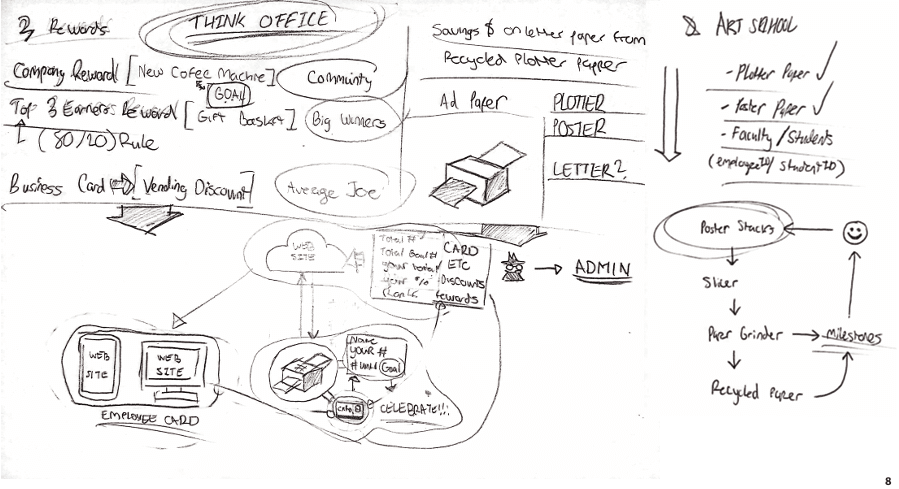
The Recycling System began with mapping of the requirements for this type of system. Modules such as websites, the machine itself, rewards, counters and other important data was collected for the ideation process

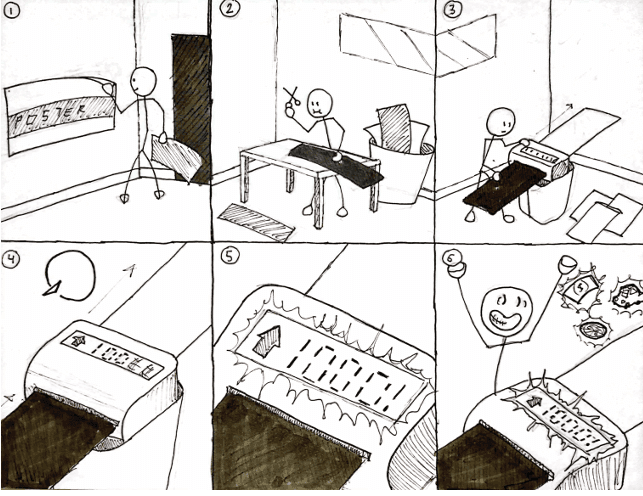
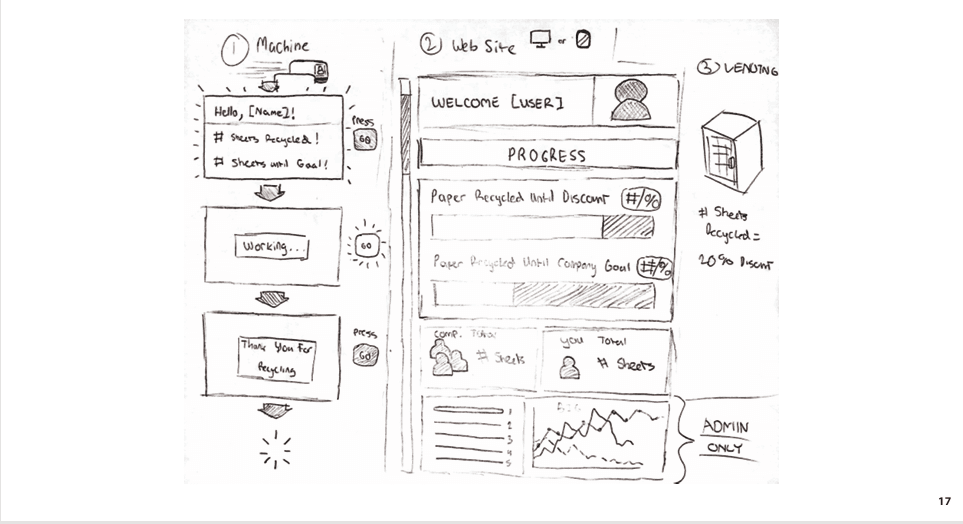
This recycling system is a good way of visualising how system would function in reality. Many seperate steps shown in this image would be compressed and refined as the ideation process went along.

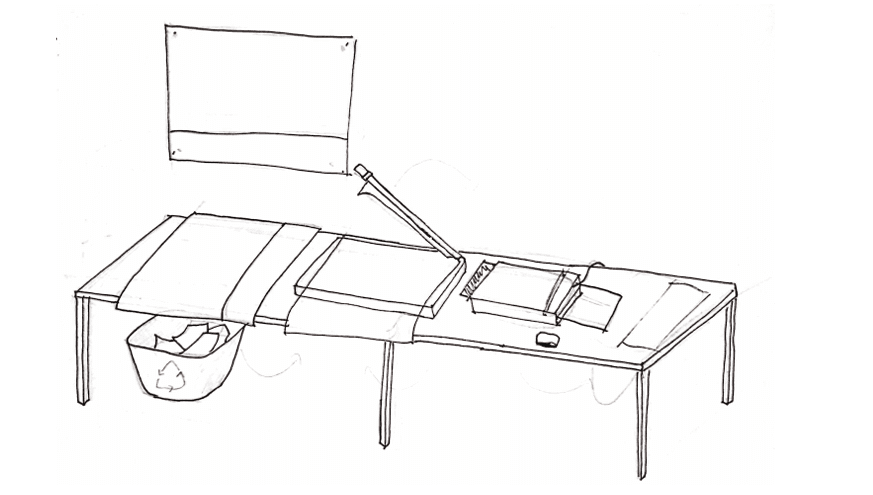
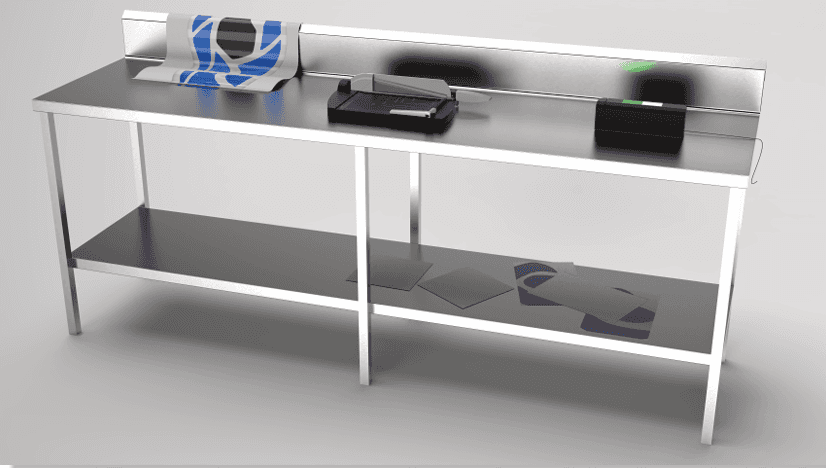
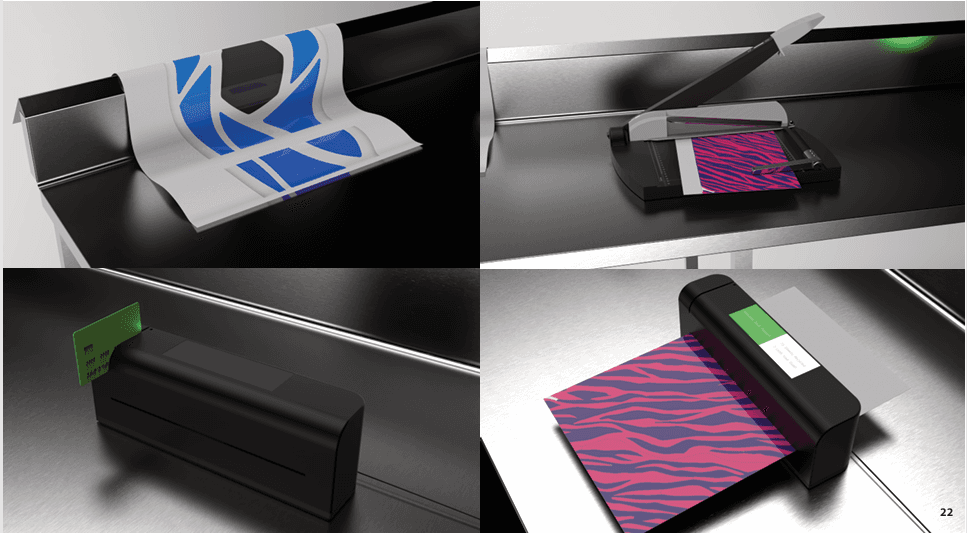
Refining the system shown in the storyboard down to a single recycling “station” allows not only for a more stratified recycling system, but also allows for this system to be scaled up to different facilities with more equipment

Refining the system shown in the storyboard down to a single recycling “station” allows not only for a more stratified recycling system, but also allows for this system to be scaled up to different facilities with more equipment

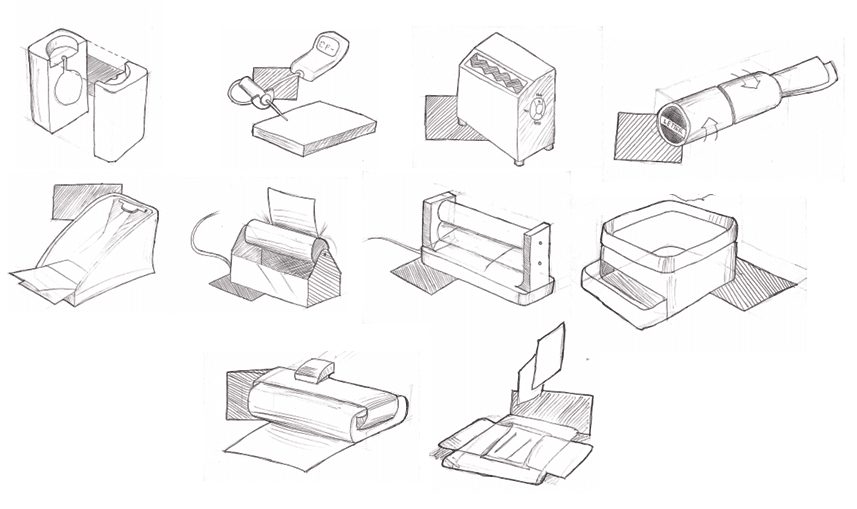
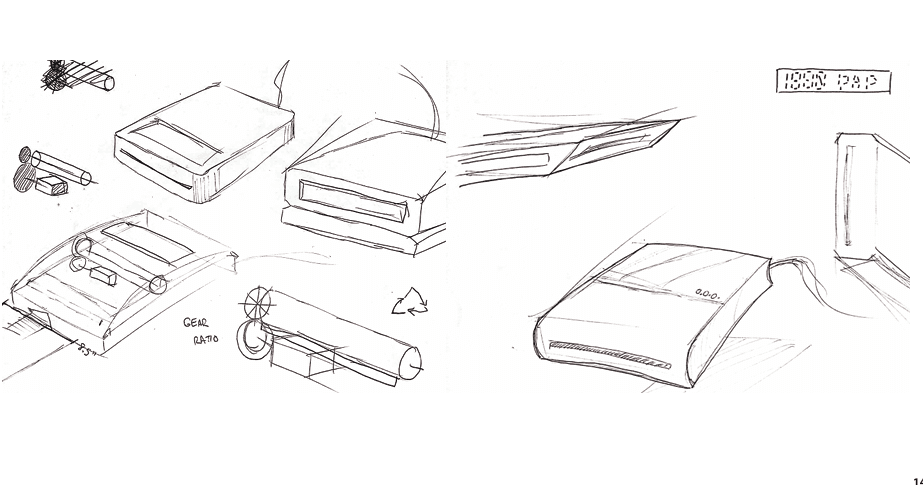
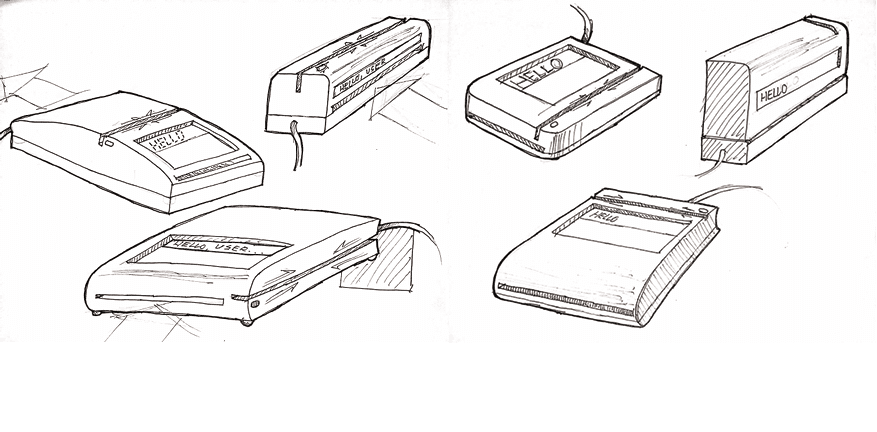
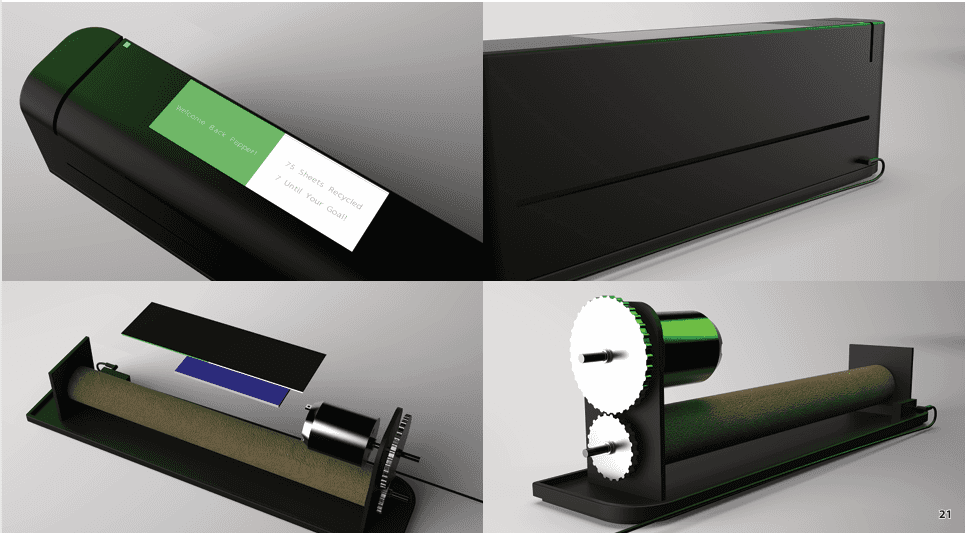
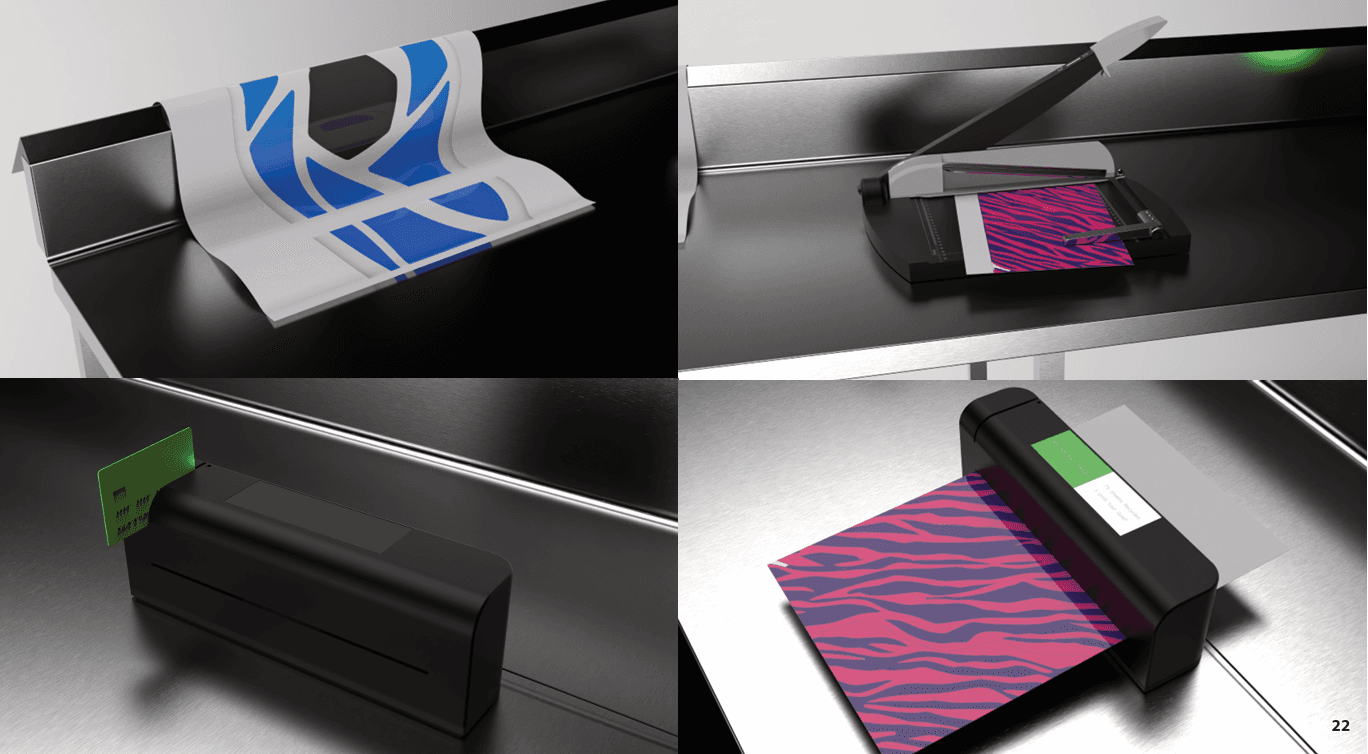
An ultimately failed attempt to realise these aformentioned modules still provided many insights to go forward with in terms of machine design. Keeping the counter and thin profile while making it significantly smaller proved successful

The “slimming” of the machine proved useful in making the mechanics function more efficiently. The sandpaper roller which removes the ink from the paper while incrementing on the counter can be fit into a much smaller space than seen in previous designs

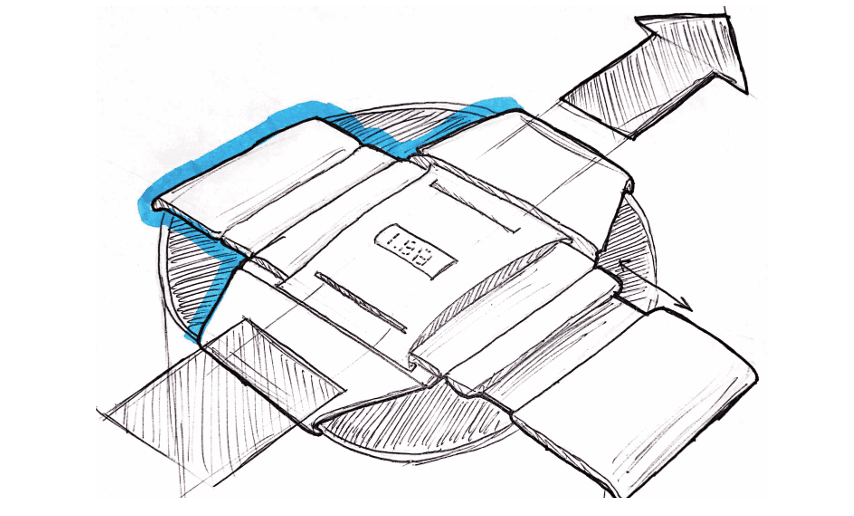
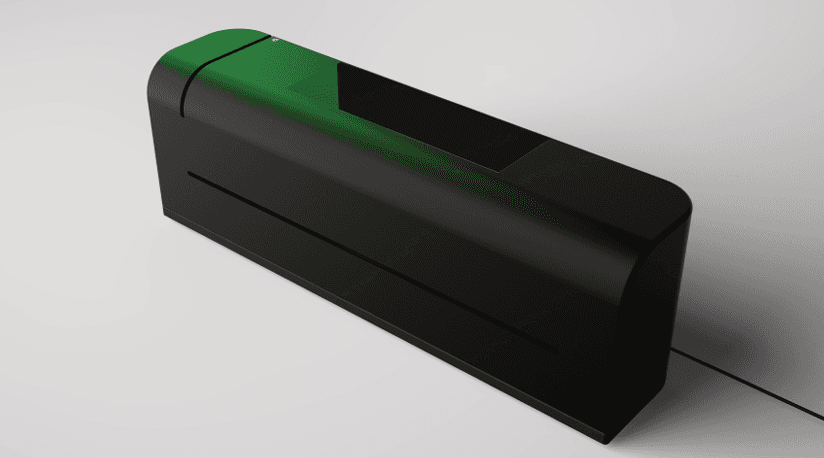
Ultimately, the most important modules in the machine were; the access slot for the sandpaper roller, the UI interaction to allow users to see their number of recycled paper, and a card reader to send this information to the database

System UI Ideation

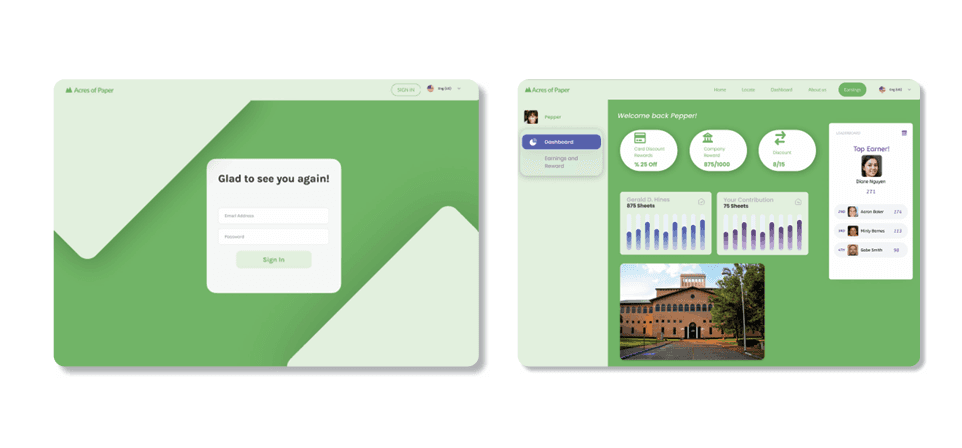
The last piece of the system was a website or counter that could give rewards that incentivized recycling behaviour. Smoothing this down to its basic requirements proved essential

The last piece of the system was a website or counter that could give rewards that incentivized recycling behaviour. Smoothing this down to its basic requirements proved essential

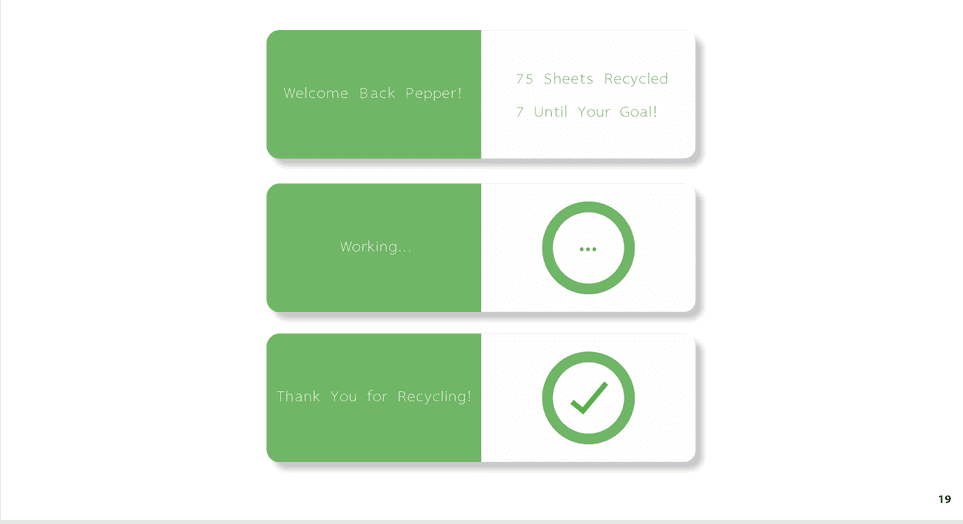
The final UI for the counter website and the UI on the machine itself provide motivation for recycling behaviour by giving an estimate for how close a user is to reaching a certain reycling goal
Building Sustainable Design Education.

S24 INDS 3397 | Advanced UX Design (UX Design)

F25 INDS 6397 | Introduction to UX Design (UX Design)

About Us

Contact Us

Design for Sustainable Consumption in People’s Daily Living.

Links

Sustainable Design Course

S23 3298 | Sustainable Design (Pilot)

F23 3500 | Industrial Design Studio V (Studio)

S24 INDS 3397 | Sustainable Design (Full Course)

Social Media

Instagram

Twitter

Facebook

2025 All Rights Reserved

2025 All Rights Reserved

2025 All Rights Reserved

System Ideation

The Recycling System began with mapping of the requirements for this type of system. Modules such as websites, the machine itself, rewards, counters and other important data was collected for the ideation process

This recycling system is a good way of visualising how system would function in reality. Many seperate steps shown in this image would be compressed and refined as the ideation process went along.

Refining the system shown in the storyboard down to a single recycling “station” allows not only for a more stratified recycling system, but also allows for this system to be scaled up to different facilities with more equipment

Refining the system shown in the storyboard down to a single recycling “station” allows not only for a more stratified recycling system, but also allows for this system to be scaled up to different facilities with more equipment

An ultimately failed attempt to realise these aformentioned modules still provided many insights to go forward with in terms of machine design. Keeping the counter and thin profile while making it significantly smaller proved successful

The “slimming” of the machine proved useful in making the mechanics function more efficiently. The sandpaper roller which removes the ink from the paper while incrementing on the counter can be fit into a much smaller space than seen in previous designs

Ultimately, the most important modules in the machine were; the access slot for the sandpaper roller, the UI interaction to allow users to see their number of recycled paper, and a card reader to send this information to the database

System Ideation

The Recycling System began with mapping of the requirements for this type of system. Modules such as websites, the machine itself, rewards, counters and other important data was collected for the ideation process

This recycling system is a good way of visualising how system would function in reality. Many seperate steps shown in this image would be compressed and refined as the ideation process went along.

Refining the system shown in the storyboard down to a single recycling “station” allows not only for a more stratified recycling system, but also allows for this system to be scaled up to different facilities with more equipment

Refining the system shown in the storyboard down to a single recycling “station” allows not only for a more stratified recycling system, but also allows for this system to be scaled up to different facilities with more equipment

An ultimately failed attempt to realise these aformentioned modules still provided many insights to go forward with in terms of machine design. Keeping the counter and thin profile while making it significantly smaller proved successful

The “slimming” of the machine proved useful in making the mechanics function more efficiently. The sandpaper roller which removes the ink from the paper while incrementing on the counter can be fit into a much smaller space than seen in previous designs

Ultimately, the most important modules in the machine were; the access slot for the sandpaper roller, the UI interaction to allow users to see their number of recycled paper, and a card reader to send this information to the database

Building Sustainable Design Education.

Design for Sustainable Consumption in People’s Daily Living.

Social Media

Instagram

Twitter

Facebook

2025 All Rights Reserved

2025 All Rights Reserved

2025 All Rights Reserved

Design for Sustainable Consumption in People’s Daily Living.

Social Media

Instagram

Twitter

Facebook

2025 All Rights Reserved

2025 All Rights Reserved

2025 All Rights Reserved

Building Sustainable Design Education.

Design for Sustainable Consumption in People’s Daily Living.

Social Media

Instagram

Twitter

Facebook

2025 All Rights Reserved

2025 All Rights Reserved

2025 All Rights Reserved

Design for Sustainable Consumption in People’s Daily Living.

Social Media

Instagram

Twitter

Facebook

2025 All Rights Reserved

2025 All Rights Reserved

2025 All Rights Reserved