Home > Courses > F23 INDS 3500 Industrial Design Studio V (Studio) > Peggy Thai
Personal Pick
Course:
Instructor:
Student Name:
INDS 3500 | Industrial Design Studio V (Studio)
Min Kang & Jeff Feng
Peggy Thai
Personal Pick reimagines online grocery shopping by letting users specify produce preferences and receive hand-picked items. The system combines a personalized app with AR glasses for store employees, ensuring quality, efficiency, and satisfaction across the shopping experience.
Objective
Online grocery shoppers often receive poor-quality produce due to the lack of customization and transparency in item selection. Current platforms do not allow users to specify preferences like ripeness, texture, or sourcing, leading to frustration, waste, and reduced trust in digital grocery services.
Secondary Research
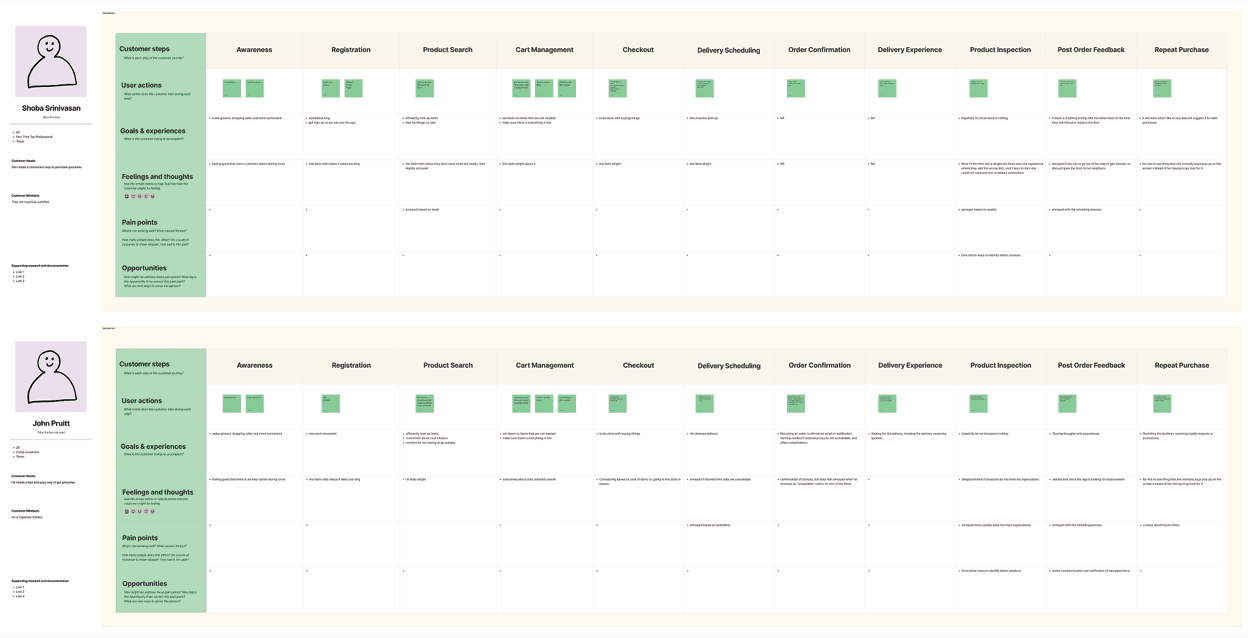
Online grocery is growing fast, but users—especially younger ones—avoid perishables due to quality concerns. Journey maps reveal pain points in delivery and product inspection, highlighting a need for more personalized, reliable shopping experiences.
Market & User Insights
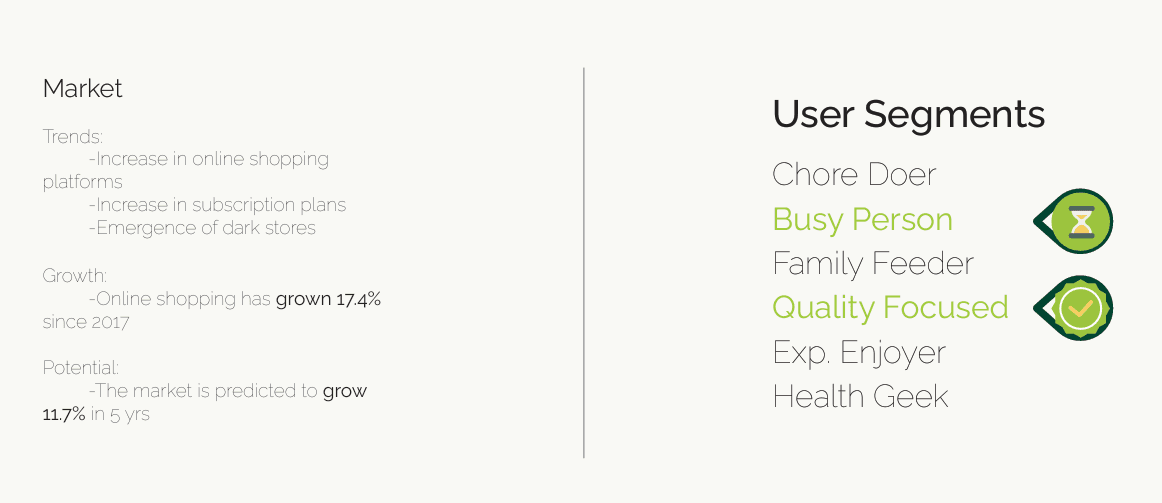
Online grocery shopping is booming—up 17.4% since 2017, with projected growth of 11.7% in five years. Key trends include subscription models and dark stores. The platform targets diverse user segments, with special focus on Busy Shoppers and Quality Seekers.
Survey & Interview
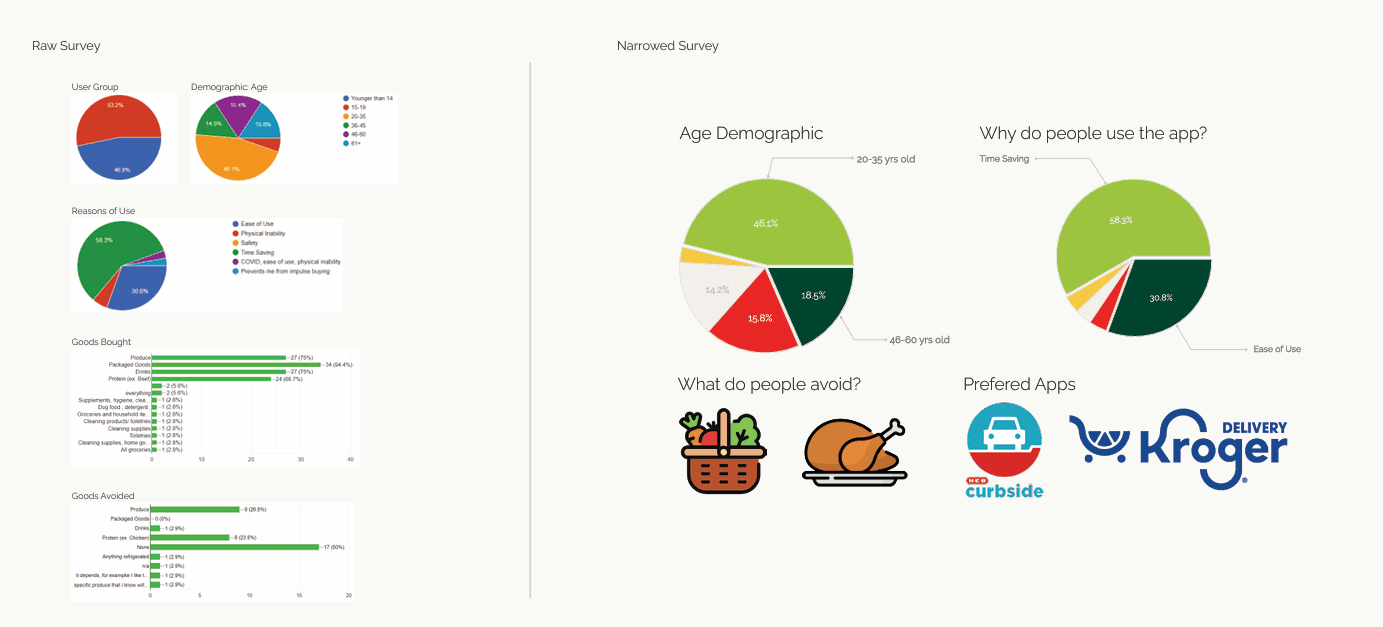
The majority of users are aged 18–35, with 70% citing time-saving and ease of use as key reasons for using grocery apps. While most buy produce, dairy, and packaged goods, many avoid meat, frozen foods, and snacks—highlighting trust issues with perishable items.
Journey Maps
System Ideation & Design
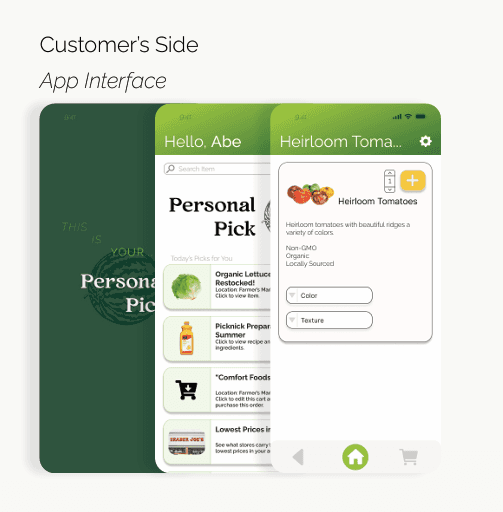
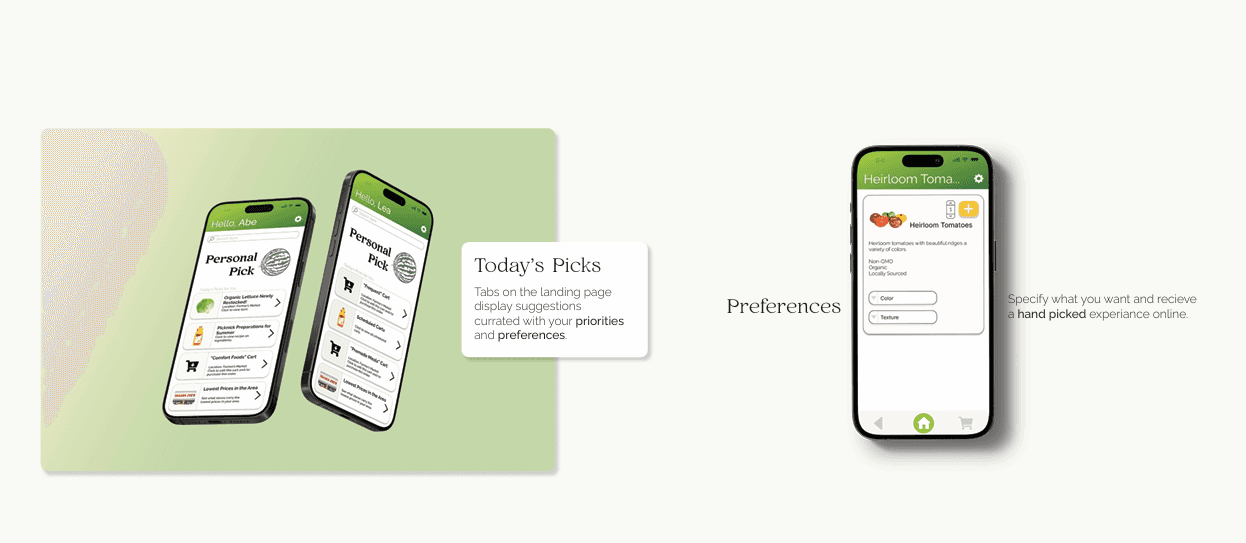
The app offers a personalized grocery experience, greeting users by name and curating daily picks based on preferences like color, texture, and sourcing. Features include recipe-based carts, seasonal highlights, and price comparisons—making produce selection intuitive, efficient, and tailored to individual needs
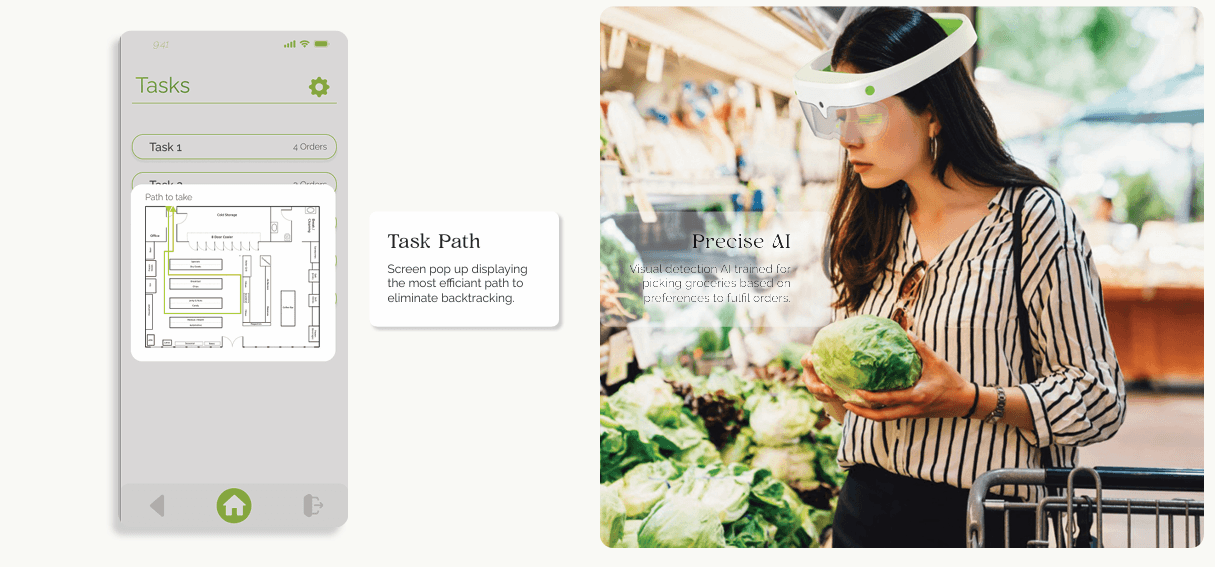
Store employees use a dedicated app to manage A.R. glasses, which guide them in selecting groceries based on customer preferences. The interface tracks device status and tasks, while the glasses provide visual cues for accurate picking—streamlining fulfillment and improving product quality.
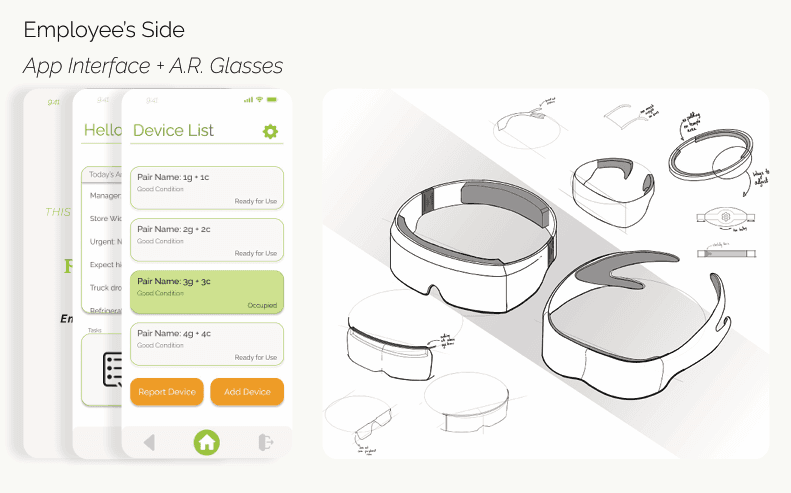
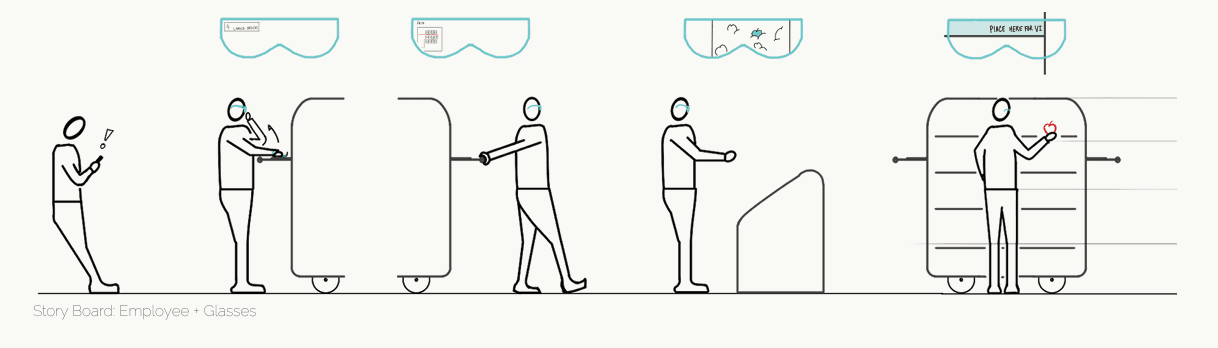
The A.R. glasses combine optical tech like cameras and spatial mapping with GPS and projection to guide employees in selecting the right items. Key design considerations include weight, adjustability, and hygiene—ensuring comfort and usability in fast-paced retail environments.
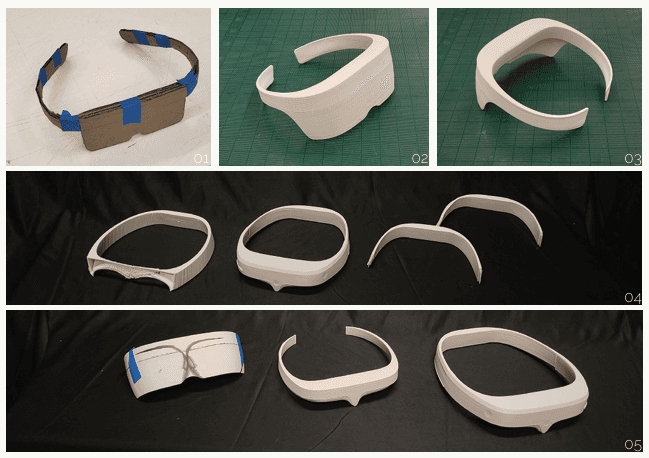
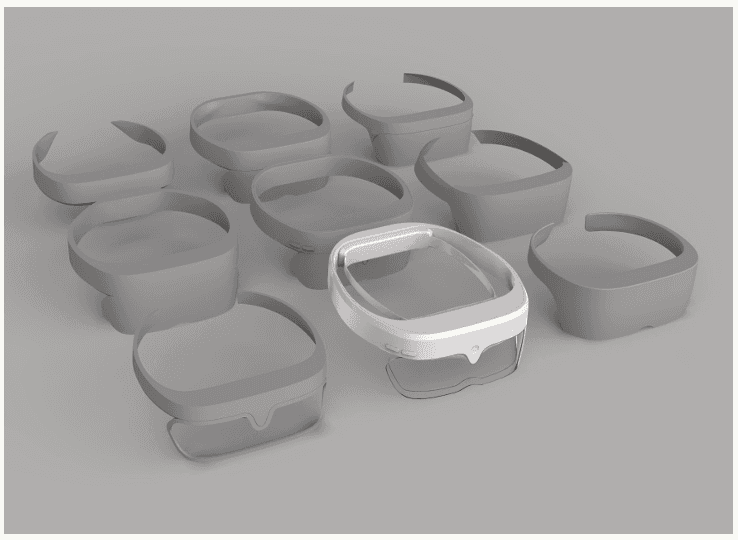
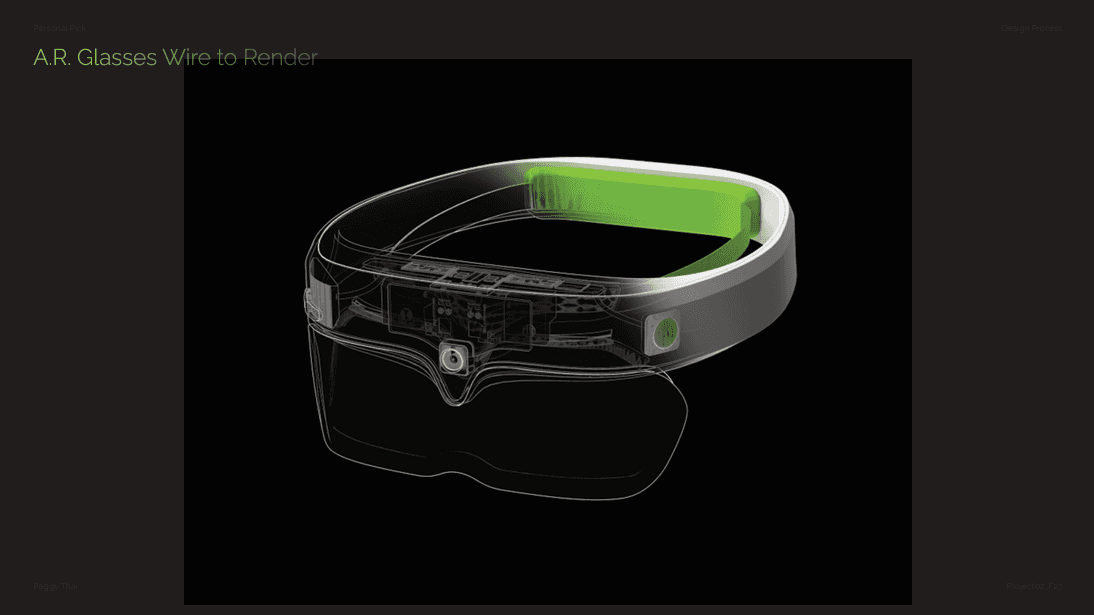
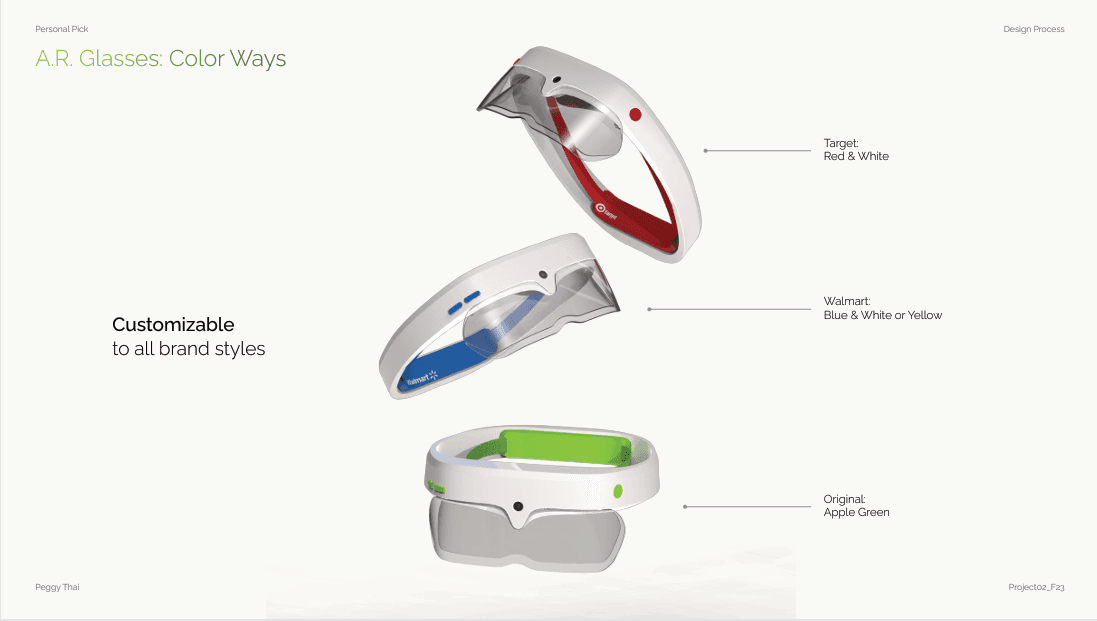
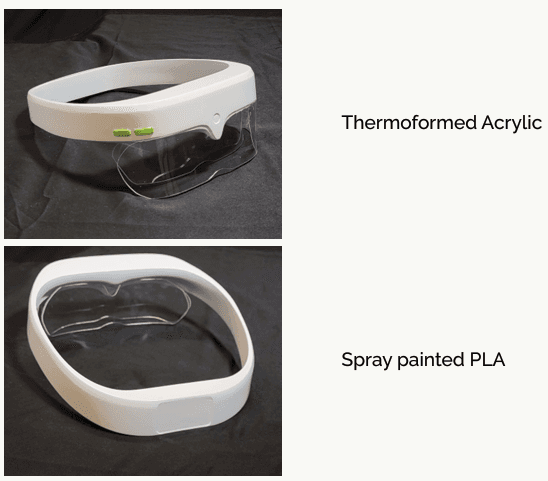
The A.R. glasses are designed to match brand aesthetics, with customizable color schemes like Target’s red and white, Walmart’s blue or yellow, and an original apple green. This flexibility supports brand identity while maintaining functional consistency
UI/UX Design
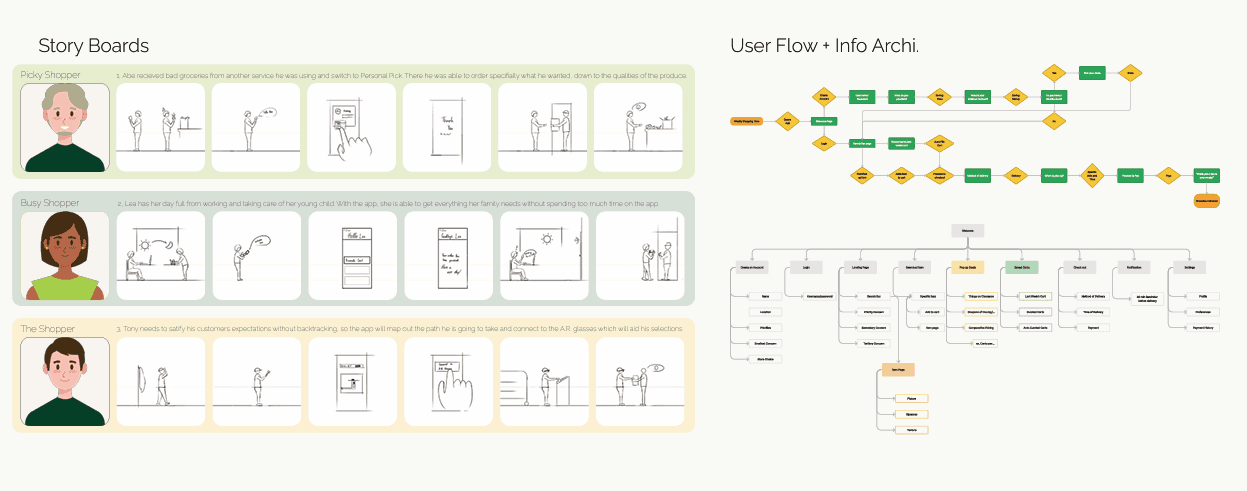
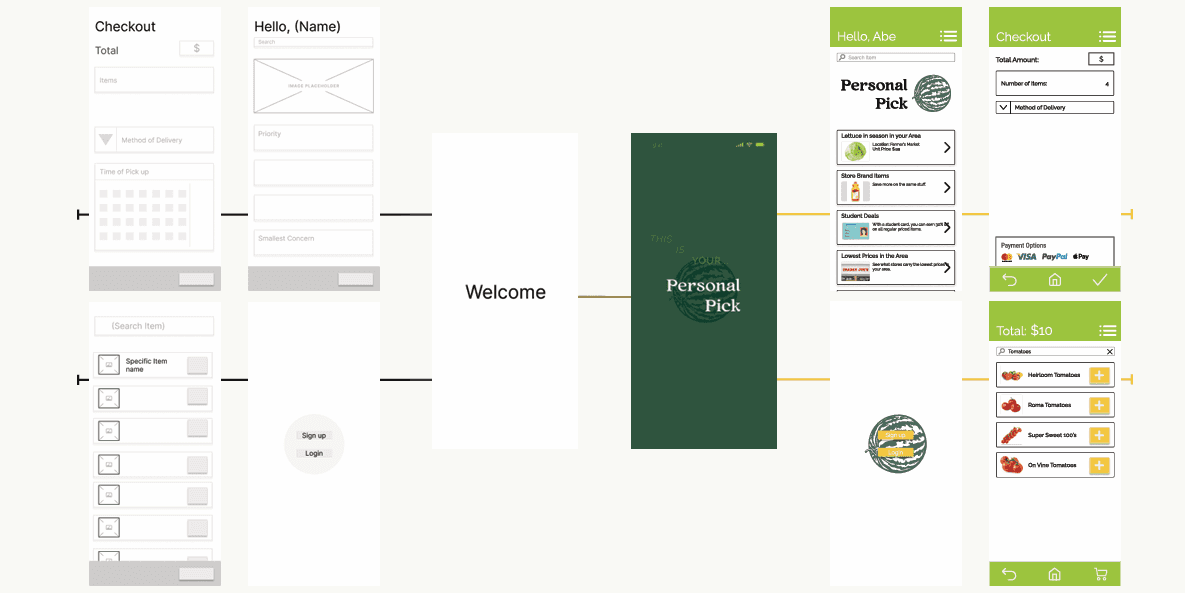
The app evolved from wireframes to polished screens, focusing on clarity, personalization, and ease of use. Key flows include login, search, and checkout—each tailored to user priorities like produce quality, delivery timing, and pricing. The final design reflects a seamless, preference-driven grocery experience.

Real-world testing with users like Brandon, Linh, and Michelle revealed key usability issues—such as unclear priority sliders and hard-to-click produce items. While the checkout flow was praised, the feedback helped refine interaction design and improve overall app responsiveness.
Final Design
The final app design delivers a personalized grocery experience for three key users curated carts for busy shoppers, detailed produce filters for picky buyers, and AR-guided tasks for employees. Together, the system ensures quality, efficiency, and trust across the entire shopping journey.
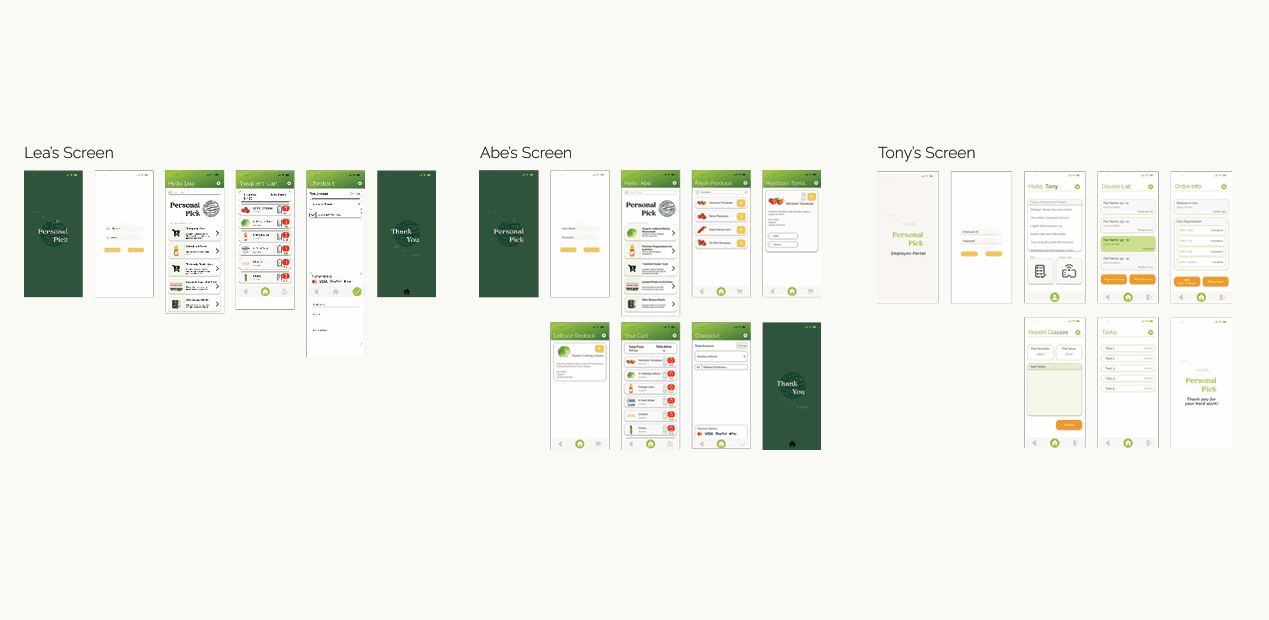
The app features personalized interfaces for different users. Lea’s screen streamlines quick shopping with curated carts, Abe’s screen highlights produce details like texture and sourcing, and Tony’s screen integrates task flows with AR support.